How The SLB Will Capture 2.9 BBF Of New Demand By 2035
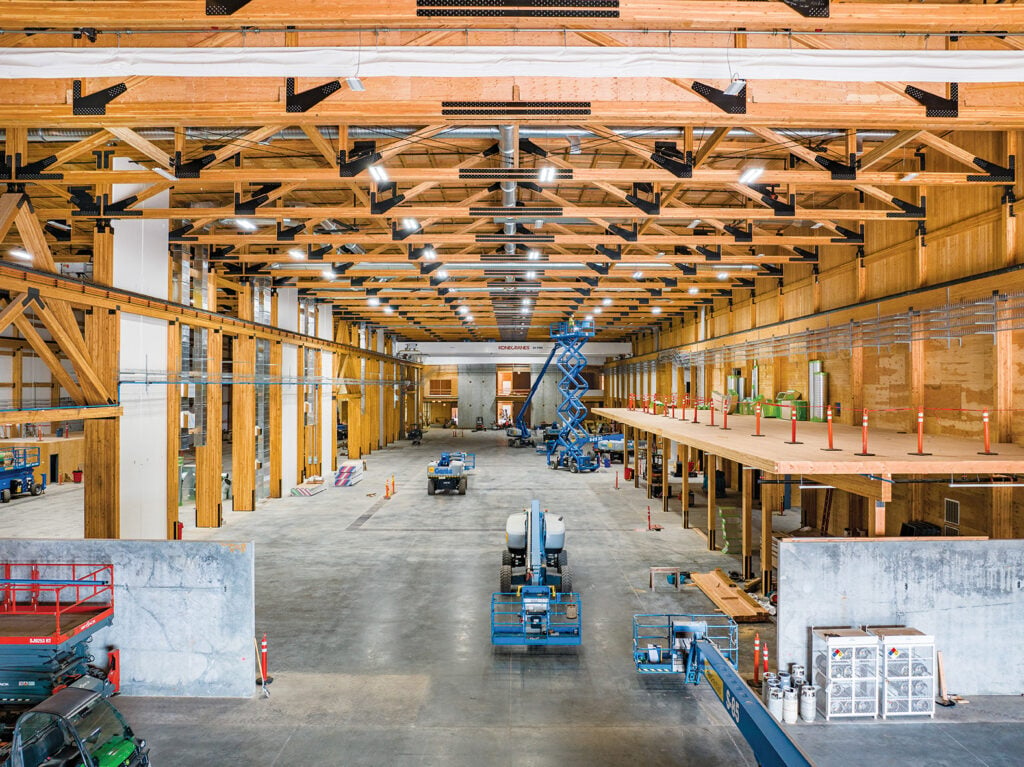
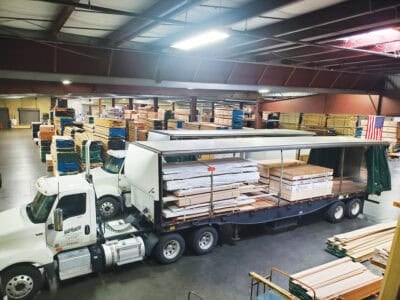
Janicki Industries Building 10 | Photo Credit: Vaagen Media
Since its founding, the Softwood Lumber Board has generated 16.7 BBF of incremental lumber demand. Now, the SLB is setting its sights higher: a new strategic plan targets 2.9 BBF of additional annual demand by 2035.
Called “From Niche to Mainstream,” the plan builds on the SLB’s strong foundation in expanding lumber demand in the built environment by creating, defending, and implementing codes and standards; amplifying design and construction best practices; inspiring innovation in new performance applications; providing technical solutions to challenges for specifiers and contractors; and strengthening the value proposition for developers and investors.
The pathway to 2.9 BBF aims for targeted growth across six construction segments where lumber can scale efficiently: multifamily 1–4 story, multifamily 5–8 story, commercial, office and banks, education, and warehouses. These segments offer the strongest combination of volume potential and achievable market-share gains—and the SLB and its funded programs are already making strong strides in these areas, paving the way for growth.
Low-Rise Multifamily: Wood’s Strongest Foothold
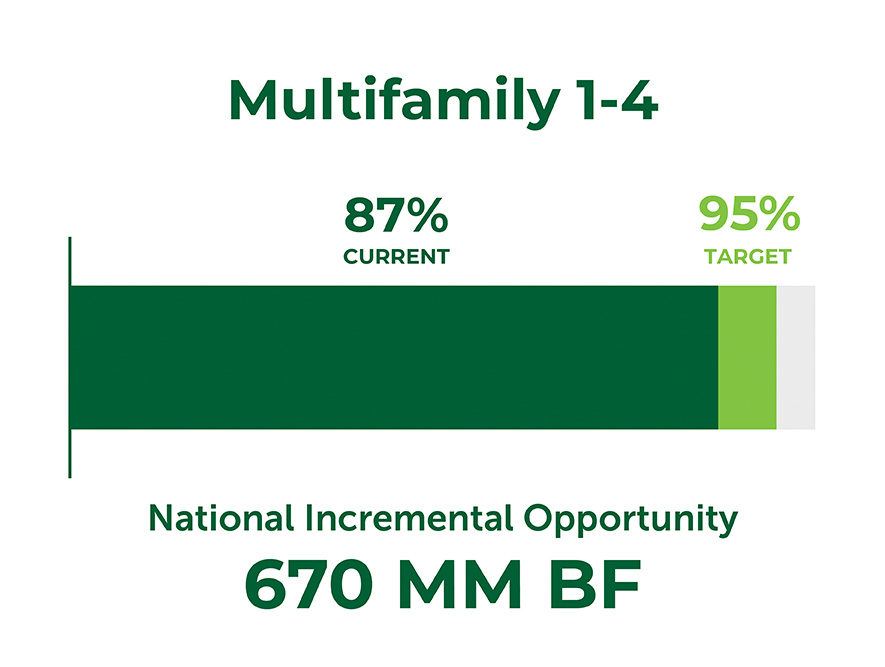
The residential low-rise category remains the largest incremental opportunity, representing 670 MM BF in potential annual volume. Urban infill, zoning reform, and “Missing Middle” housing policies create room for expansion even as lumber maintains a strong share.
Light-frame systems align naturally with duplexes, triplexes, townhomes, and low-rise apartment buildings increasingly favored in affordability-driven markets. Securing this volume requires protecting share while expanding hybrid systems where additional performance is needed. Because this segment builds on cost efficiency, speed, and workforce familiarity, it represents the most capital-efficient path to near-term growth.
Senior housing represents a particularly notable subsegment of the multifamily opportunity—and one of the clearest structural growth opportunities of the next decade. To meet demand, the U.S. must deliver more than 100,000 senior housing units annually through the 2030s—nearly four times today’s pace of 26,000 units per year. About 83% of senior housing projects are 1–4 stories, where light-frame wood is most cost-effective. WoodWorks, an SLB-funded program that works directly with design and construction teams to facilitate a shift toward lumber, is playing a critical role in showing design teams how most senior housing can utilize light-frame construction.
Mid-Rise Multifamily: Where Hybrid Systems Are Winning
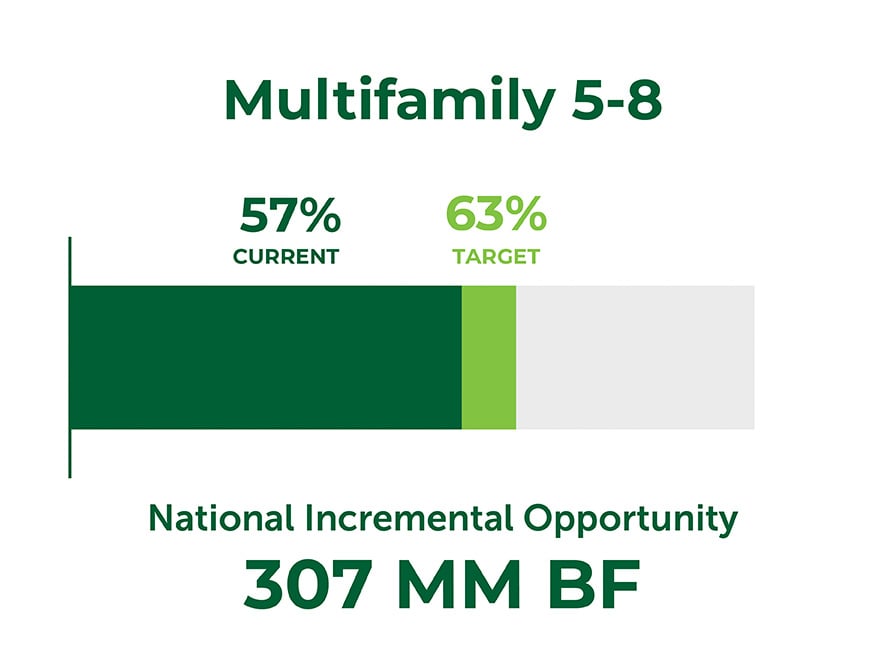
The mid-rise segment offers 307 MM BF in annual incremental potential, with headroom in markets traditionally dominated by steel and concrete. Hybrid systems combining light-frame and mass timber enable lumber to compete in denser urban conditions while preserving cost and schedule advantages.
The SLB-funded American Wood Council’s work to strengthen lumber’s position across building codes and standards is critical to growth in this segment. In the 2027 I-code development cycle, the AWC successfully opposed a proposal that would have increased the required fire resistance—and unnecessarily increased costs—of podium construction, a common construction type used in 5–8 story multifamily buildings.
Commercial: Repeatable, Scalable Volume
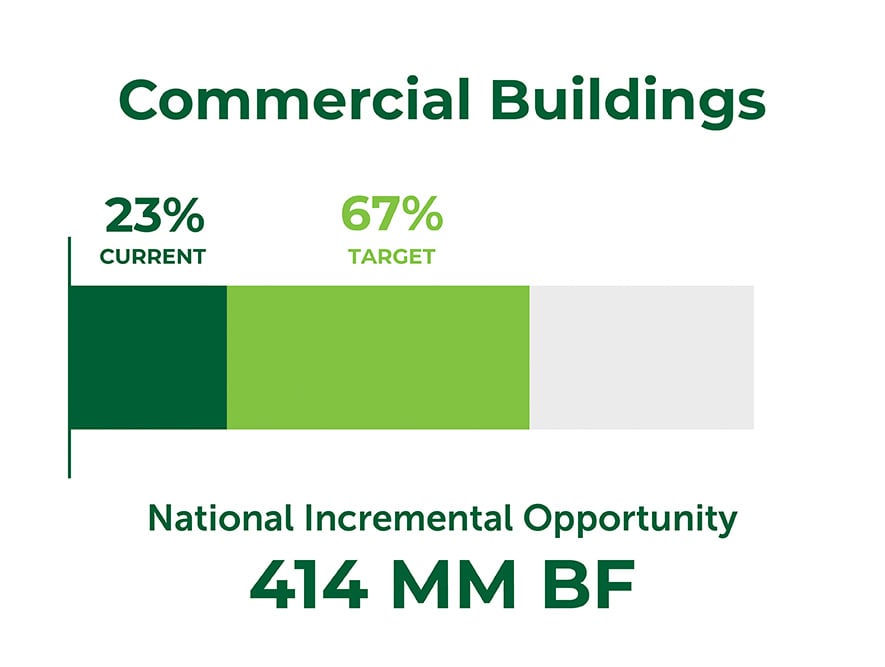
Low-rise commercial buildings represent 414 MM BF in annual incremental opportunity. Retail, restaurant, and community-scale formats rely on repeatable prototypes with relatively low technical barriers.
Portfolio-level specification decisions by national and regional developers can unlock scalable gains. The SLB can also help speed the shift by focusing resources on metropolitan areas with the strongest near-term conversion potential, enabling repeatable project wins that can be scaled to additional markets.
Office, Banks, and Data Centers: High-Performance Demand for Lumber
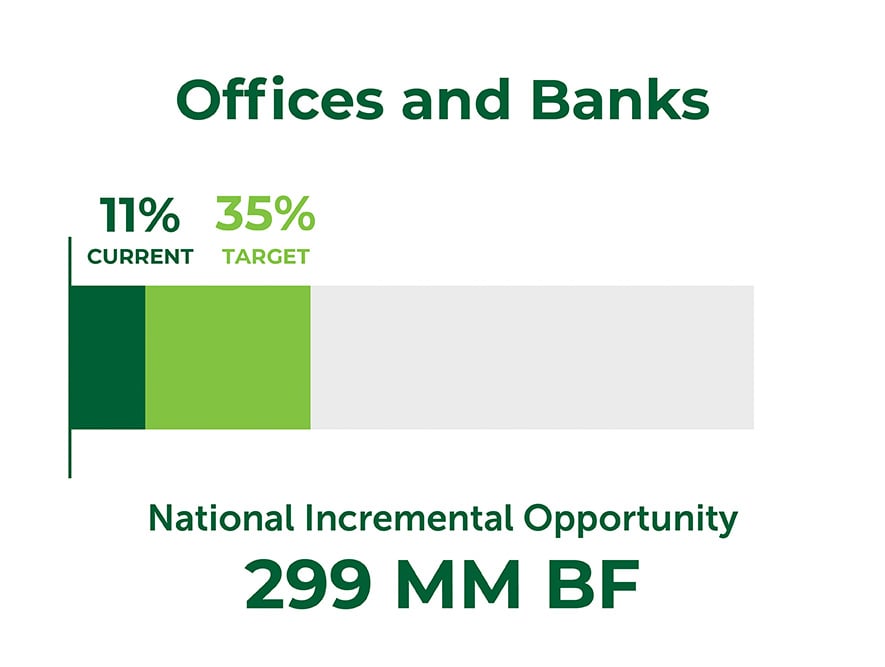
Offices and banks represent 299 MM BF in annual incremental potential by increasing market share from 11 percent to 35 percent. Demand persists for high-performance, differentiated environments despite moderation in overall office construction activity.
Mass timber and hybrid systems position lumber as both a decarbonization strategy and a tenant-attraction tool, with exposed timber structures enabling developers to distinguish their assets in competitive leasing markets. Data center construction—projected to grow 26 percent in 2026 and 17 percent in 2027—further expands the addressable opportunity for lumber systems.
Education: Institutional Momentum with Scalable Volume
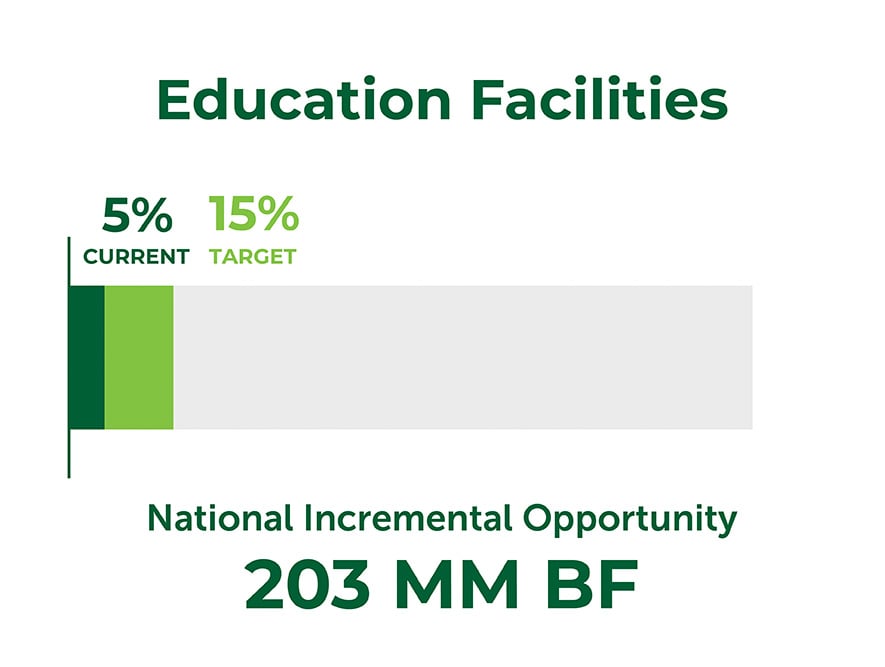
Education construction represents 203 MM BF in annual incremental opportunity across light-frame, mass timber, and hybrid systems. As districts and universities advance postponed projects, many are prioritizing buildings that meet decarbonization targets and enhance student wellness.
Think Wood, the SLB’s communications and content platform, is using storytelling to highlight how lumber-based structural systems align with those priorities. A recent Think Wood profile of the mass timber Anthony Timberlands Center at the University of Arkansas, for example, demonstrates how an exposed timber structure can serve both teaching and architectural functions.
Warehouses: Industrial Scale, Long-Term Upside
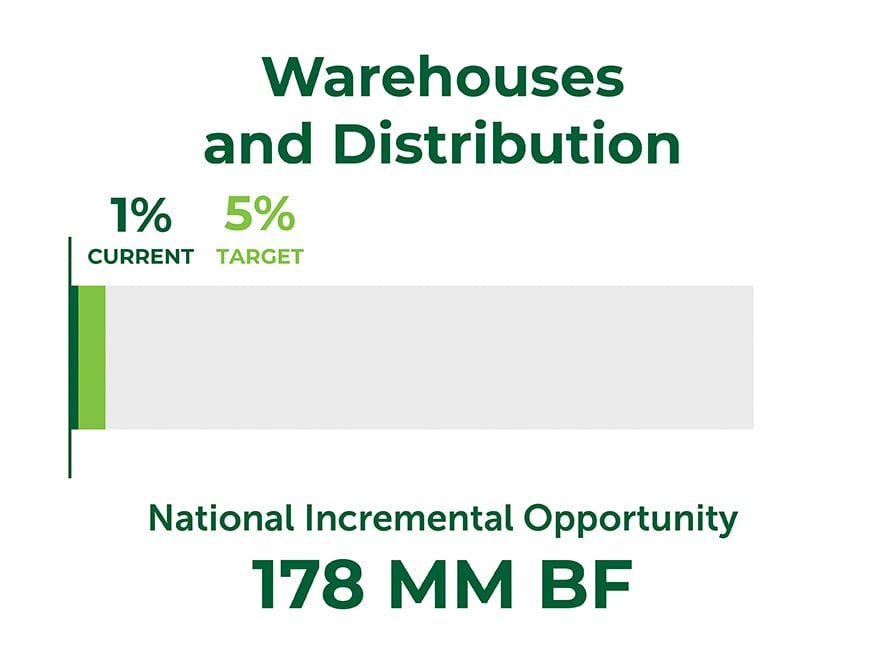
Warehouse construction represents 178 MM BF in incremental opportunity at just 5% market share, with significant upside as penetration increases. Even modest adoption drives meaningful volume. At 13 percent market share, demand exceeds 550 MM BF—demonstrating how incremental penetration can produce outsized volume gains.
WoodWorks is supporting industrial developers with structural guidance and performance data for hybrid wall panels and shear systems, helping reduce uncertainty in a segment traditionally dominated by steel and concrete.
Focused Execution in High-Impact Markets
Growth across these segments depends on disciplined execution: prioritizing cities with the most opportunity for growth, reinforcing cost and speed advantages, and advancing hybrid systems that compete directly with steel and concrete. Targeting segments where wood can scale and pencil out leads to repeat approvals, institutional acceptance, and steady volume gains. Developers, public sector leaders, and executives interested in extending this impact and shifting the market can reach out to learn more at info@softwoodlumberboard.org.
The lumber industry’s investment in the SLB is paying off: without it, annual softwood lumber use from 2021–2025 would have been 3.4% lower. With continued industry support, the SLB’s disciplined strategy will unlock even more demand across these six high-priority segments.