Real Quality Is Experienced, Not Manufactured

By Brad Kirkbride, Managing Director, Western Red Cedar Lumber Association
In a world increasingly shaped by synthetics and imitations, authentic materials like Western Red Cedar ground us in something real, offering a tangible connection to nature that speaks to our senses, our well-being, and our innate need for honesty in the built environment. They remind us that not everything of value can be replicated, and that real quality is experienced, not manufactured.
Although product differentiation in our industry often takes a back seat to price competition, Western Red Cedar continues to stand apart, not just as a premium wood species, but as a benchmark against which others measure themselves. When competing materials describe their products as the “Western Red Cedar of” their category, it reinforces a simple reality for manufacturers, distributors, and retailers alike: WRC is the reference point. It is, in effect, the “Porsche” of building materials: an original that defines performance, aesthetics, and value.
The Real Cedar logo
This positioning is not accidental. Western Red Cedar has earned its reputation through a rare combination of natural attributes that remain highly relevant in today’s construction environment. Its dimensional stability, workability, and durability make it a dependable choice across exterior and interior applications. For manufacturers, this translates into efficient milling and consistent production. For distributors and retailers, it means fewer callbacks and stronger customer satisfaction. For end users, it delivers long-term performance with minimal maintenance.
Perhaps the most recognizable advantage of WRC is its natural appearance. The species offers a unique spectrum of colors, ranging from light amber tones to deep reddish hues, along with a fine, straight grain that provides both warmth and versatility. Whether specified in clear vertical grain for a contemporary aesthetic or in knotty grades for a more rustic look, WRC adapts seamlessly across architectural styles. This visual flexibility remains a primary driver of demand, particularly as design trends increasingly favor authentic, natural materials over synthetics.
That shift toward natural materials is not just aesthetic. It is also environmental. Western Red Cedar is a renewable resource sourced from responsibly managed forests, often backed by third-party certification. It requires relatively low energy to process compared to many alternative materials and, importantly, stores carbon throughout its lifecycle. As the building sector places greater emphasis on reducing embodied carbon, WRC offers a compelling advantage. At end of life, it can be reused, reclaimed, or allowed to biodegrade, avoiding the landfill challenges associated with many composite or plastic-based products.
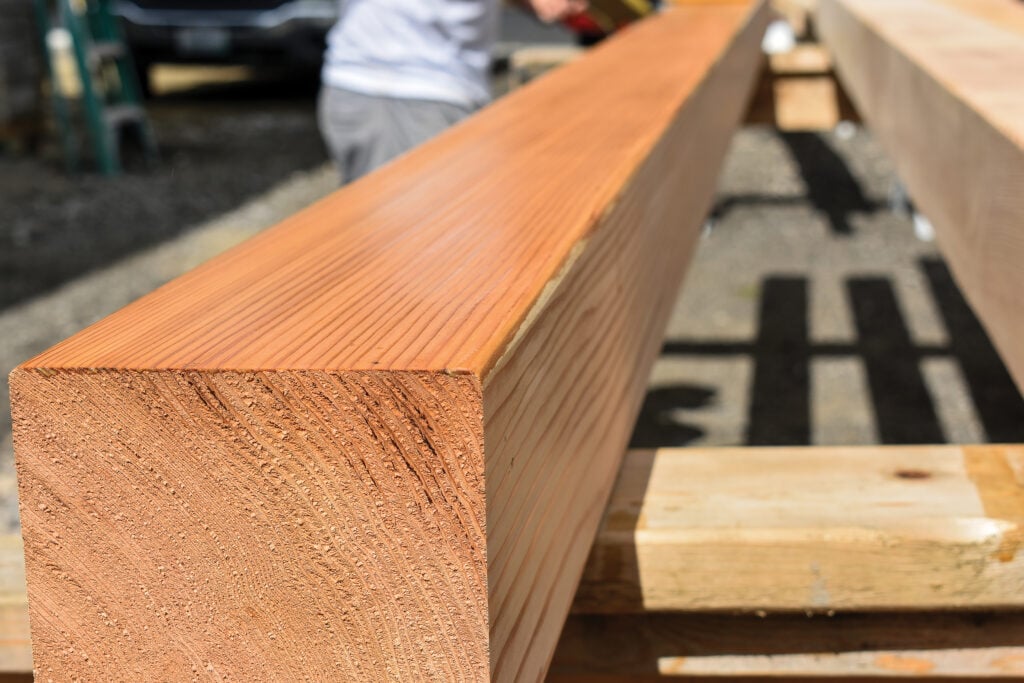
WRCLA member manufactured Real Cedar timber
Closely tied to sustainability is the growing influence of biophilic design. Research continues to show that natural materials like wood contribute to improved occupant well-being, reduced stress, and increased productivity. Western Red Cedar, with its warm tones, tactile softness, and subtle aroma, engages the senses in ways substitute or faux-wood products cannot replicate. For commercial, institutional, and residential projects, this connection to nature is becoming a measurable value proposition rather than a purely aesthetic choice.
Performance in exterior environments remains another cornerstone of WRC’s reputation. Naturally resistant to rot, decay, and insect attack, it performs exceptionally well without the need for chemical treatment or modification. This inherent durability simplifies manufacturing and installation while enhancing its environmental profile. Over time, WRC weathers gracefully, developing a distinctive silver-gray patina that continues to appeal to designers and homeowners alike.
Despite these advantages, the Western Red Cedar market faces a growing challenge: product confusion. The increasing presence of other species marketed as “Cedar,” such as Japanese Sugi, has introduced ambiguity into the marketplace. While these alternatives may have their own merits, problems arise when they are positioned as direct substitutes for WRC, particularly in applications where performance expectations differ. When these products fail to meet those expectations, it is not just the individual product that suffers, but the broader perception of “Cedar” as a category.
For the supply chain, this underscores the importance of clear product differentiation. Real Cedar is not just another “Cedar”; it is a distinct species (Thuja plicata) with a proven performance record and a well-established brand. Protecting that distinction is critical, not only for maintaining product value, but also for ensuring customers receive the quality and performance they expect.
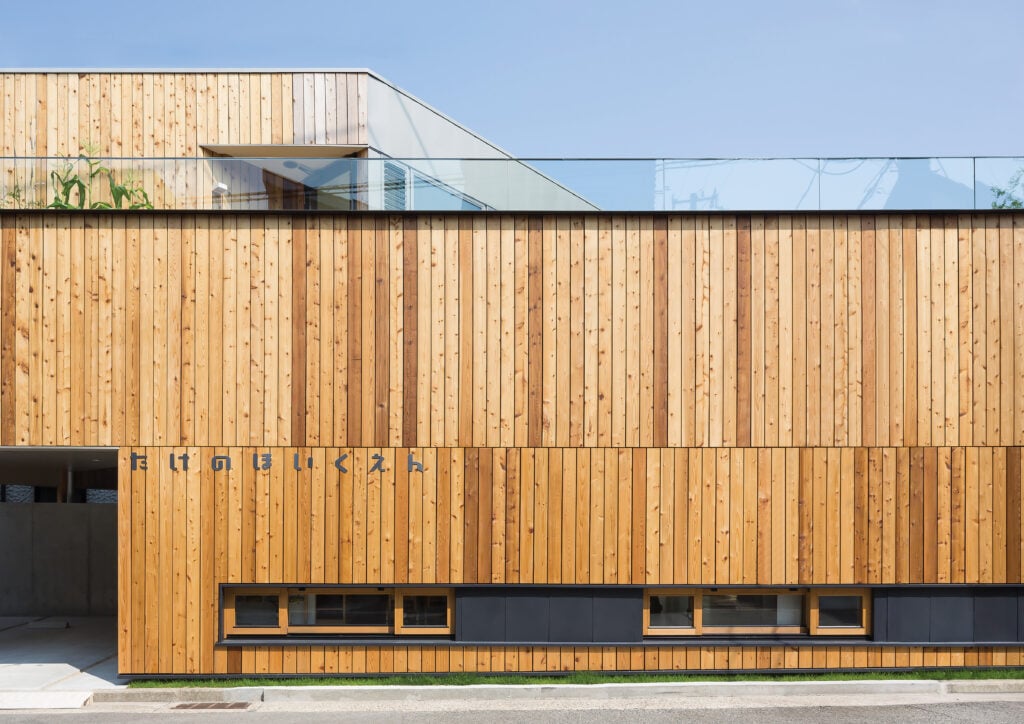
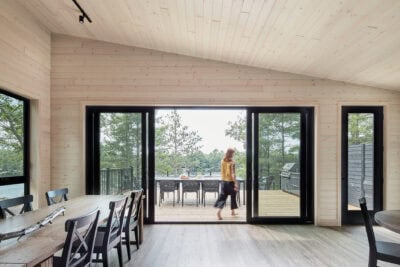
Knotty grade Real Cedar siding
This is where the Real Cedar brand plays a vital role. The Real Cedar logo is more than a marketing tool; it is a mark of authenticity, quality, and accountability across the supply chain. Products bearing the logo are backed by members of the Western Red Cedar Lumber Association throughout North America and internationally, representing a commitment to consistent standards, responsible sourcing, and industry-wide support. For distributors and retailers, it provides a clear point of differentiation in a crowded market. For customers, it offers confidence that they are purchasing genuine Western Red Cedar.
Competitors will continue to compare themselves to it, and alternative species will continue to enter the market. But the fundamental truth remains unchanged: there is only one Real Cedar. For those looking to specify, stock, or sell the real thing, the simplest way to ensure authenticity is also the most effective: just look for the Real Cedar logo.
Established in 1954, the WRCLA is the voice of the Cedar industry and has 132 members in various locations throughout North America.