Gorman Group Focuses On Value Recovery, Consistency Across Multi-Mill System
“You have to start with the best log possible to get the high-quality products our customers expect, and that’s what we do,”– Marc Malone, sales manager, Gorman Bros. Lumber Ltd.
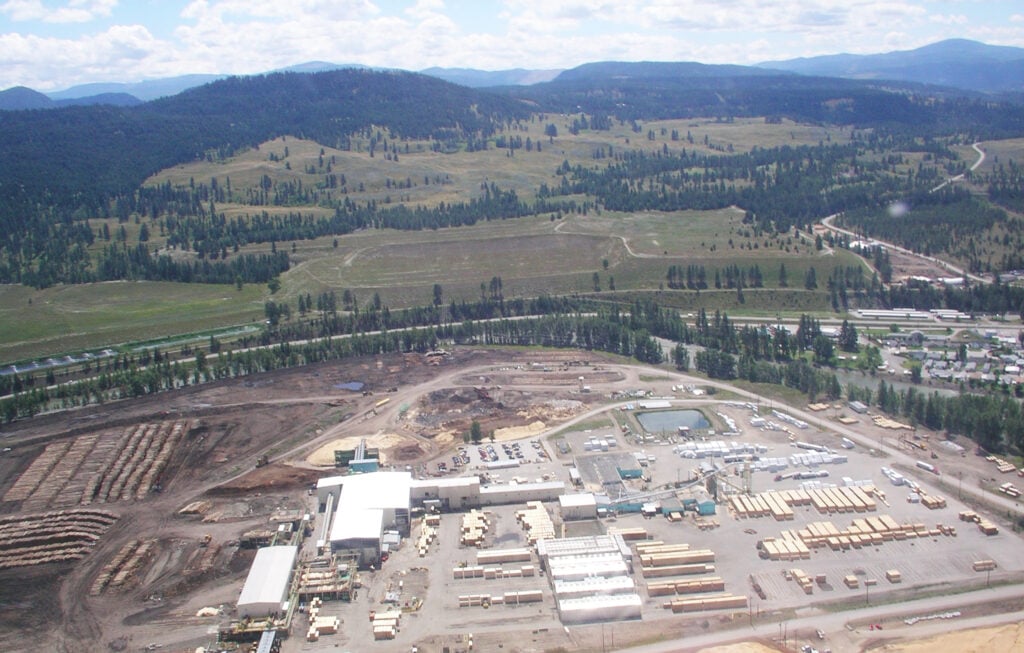
Similkameen Forest Products, formerly Weyerhaeuser Princeton, now operates as a Gorman division following its 2025 acquisition.
In the interior of British Columbia, where seasonal swings produce slow-growing high-quality fiber, Gorman Group continues to differentiate itself through a value-driven manufacturing model centered on consistency, product stability and long-term customer relationships. This differentiation enables the company to deliver reliable, high-performance products in applications where precision and stability matter most to customers. At its West Kelowna, BC, facility, known as Gorman Bros. Lumber, the company produces S4S boards from Engelmann Spruce and Lodgepole Pine for appearance-grade applications across North America and export markets. The operation currently manufactures approximately 130 to 150 million board feet annually, with flexibility to increase output depending on fiber availability and market conditions.
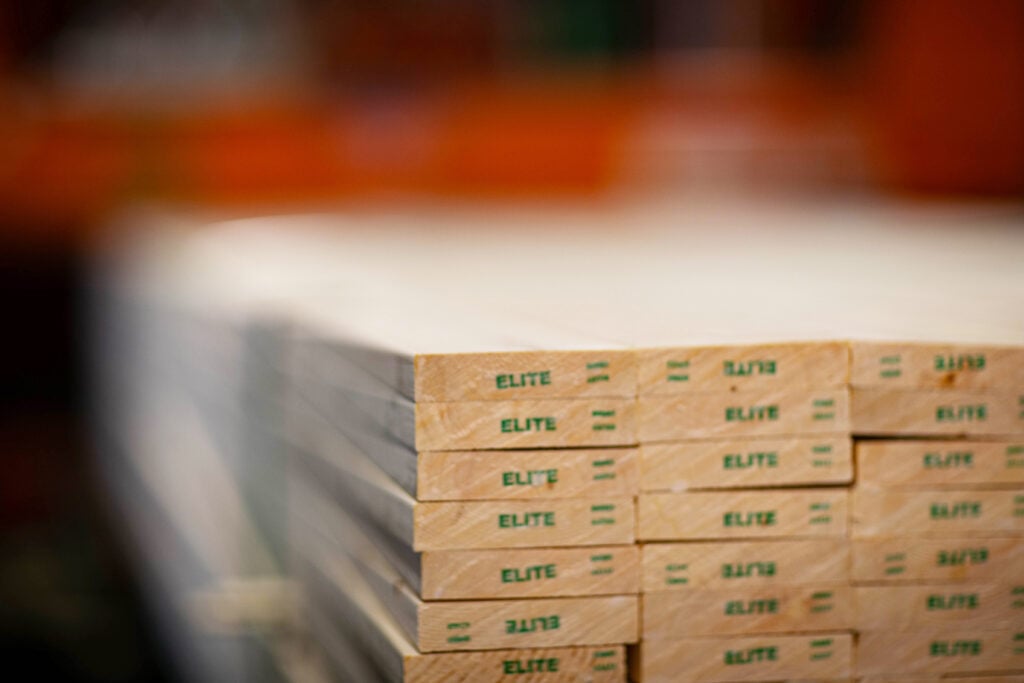
Elite® boards showcase Gorman’s precision manufacturing and commitment to consistent, appearance-grade quality.
“Our customers depend on consistency and finish quality, and that’s exactly what these S4S products are designed to deliver,” said Sales Manager Marc Malone. “They’re surfaced on four sides, micro-eased edges, dried to around 12 percent moisture content, stamped, end-waxed and then we run a wide range of patterns. We have hundreds overall, but about 30 to 35 that we run consistently.”
Gorman’s Westbank facility is focused on extracting maximum value from each log, which is a different model than most interior commodity mills that are more concerned about volume throughput at the lowest possible cost.
“We look like a sawmill because logs go in one end and lumber comes out the other,” said outgoing CEO Nick Arkle. “But everything in between is designed around extracting value. It’s a remanufacturing plant in sawmill clothing.”
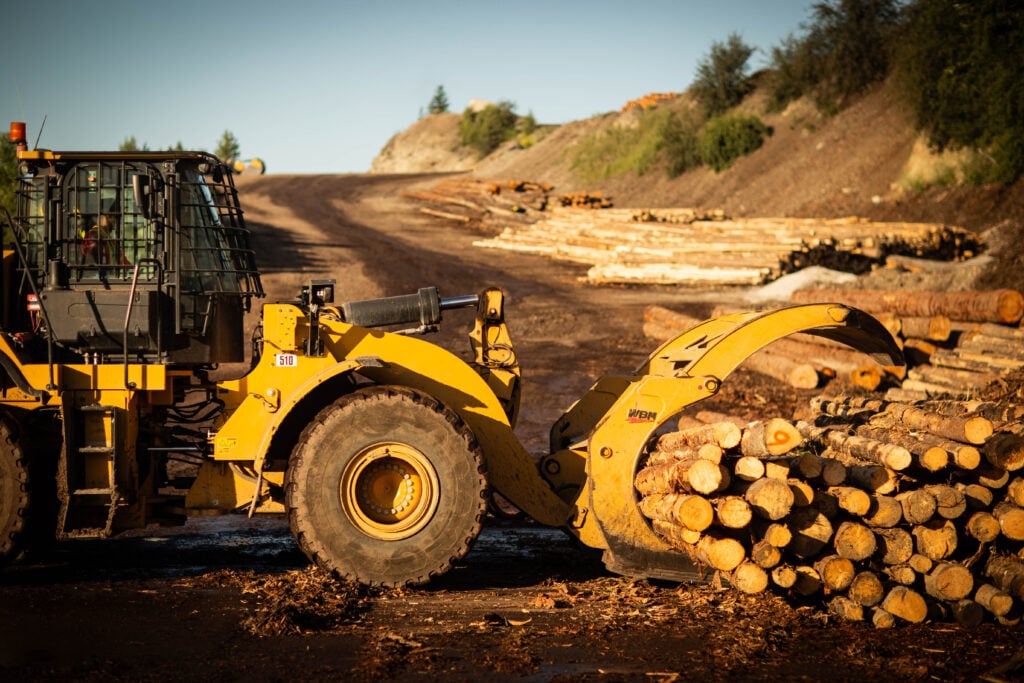
High-quality logs are sorted and handled to support Gorman’s value-driven manufacturing process.
Logs are sorted by diameter before entering separate breakdown systems, including a headrig for larger logs and optimized scanning and finishing systems throughout the mill. Unlike linear production models, lumber may move through multiple processing steps to maximize recovery and grade.
“In a conventional mill, it’s one straight line from log to lumber,” Arkle said. “Here it goes back and forth because we’re focused on maximizing value. While this results in moderate production volumes and a higher cost structure, it positions us to compete in higher-end markets.”
Approximately 50 percent of Gorman’s fiber supply is sourced from tenured land, with the balance purchased through a network of suppliers, trades and open-market transactions.
“You can’t make a silk purse out of a sow’s ear,” Malone said. “To get the premium products that perform you have to start with the best log possible, and that’s what we do.”
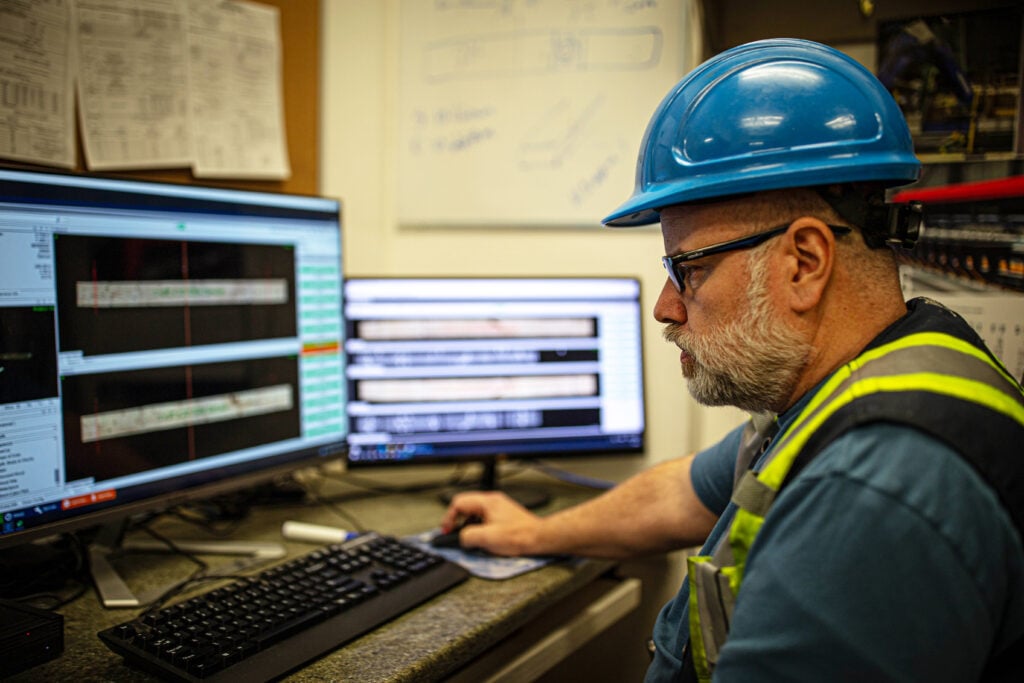
Grading and optimization ensure consistent quality and maximize value recovery from every board.
The interior region’s slow-growing timber contributes to tighter grain and improved stability in finished products. “The smaller, slower-growing trees create a more stable board,” Malone said. “That’s what gives us the high-performance product our customers expect.”
Even so, not all purchased fiber is suitable for the company’s product mix. “We may buy 100 percent of a stand and then spin off 40 percent of it because it’s not the quality we need,” Arkle said. “It’s about margin through value, not margin through cost reduction. That strategy often involves trading logs or moving material between operations to make sure the right fiber ends up in the right mill.”
Drying remains a key differentiator for the Gorman Bros. Lumber operation, with an emphasis on tight moisture control and reduced variability. “We target about 12.5 percent moisture content,” Malone said. “Our standard deviation is around 1.3 to 1.4. The amount of attention that goes into that is significant. And it’s critical for product stability, reducing waste, improving fit and finish, and supporting efficient installation for our downstream customers.”
Drying cycles can extend up to a week depending on external conditions. “I use the crockpot analogy, low and slow,” Malone said. “What you get at the end is a flat, stable board.” Consistency in drying translates directly into reduced issues for customers in the field. “We had a customer using our Elite boards behind drywall on stair systems,” Arkle said. “No one ever sees it, but they buy it because it’s consistent, stable and easy to work with.”
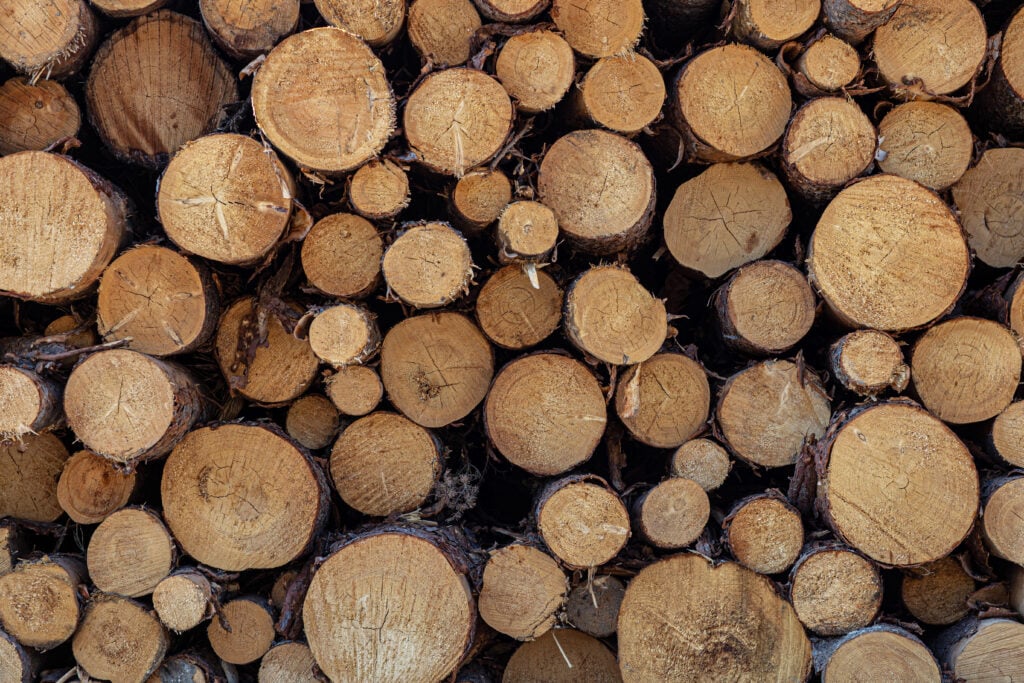
Tight-grain logs from interior B.C. forests provide the foundation for stable, high-performance lumber.
The Gorman Group operates a network of facilities across British Columbia and the Pacific Northwest, including the specialty sawmill in West Kelowna, B.C., a reload operation in Oroville, WA; the Canoe Forest Products plywood mill; the Downie Selkirk operation in Revelstoke; a pole plant in Lumby; and the recently acquired Princeton sawmill, renamed Similkameen Forest Products.
Combined, the group employs more than 1,000 people. The acquisition of the Princeton facility in late 2025 added significant capacity and product diversification to the group.
“This is a marathon, not a sprint,” Arkle explained. “Purchasing the Princeton operation was about diversification and building an ecosystem where each operation supports the others.”
Similkameen Forest Products produces commodity structural lumber, including 2×4 and 2×6, along with J-Grade, machine stress-rated products and lamstock. It also supplies blanks that are further processed at the West Kelowna mill. “It added roughly a third to the size of the group,” Arkle said. “But complexity probably doubled.”
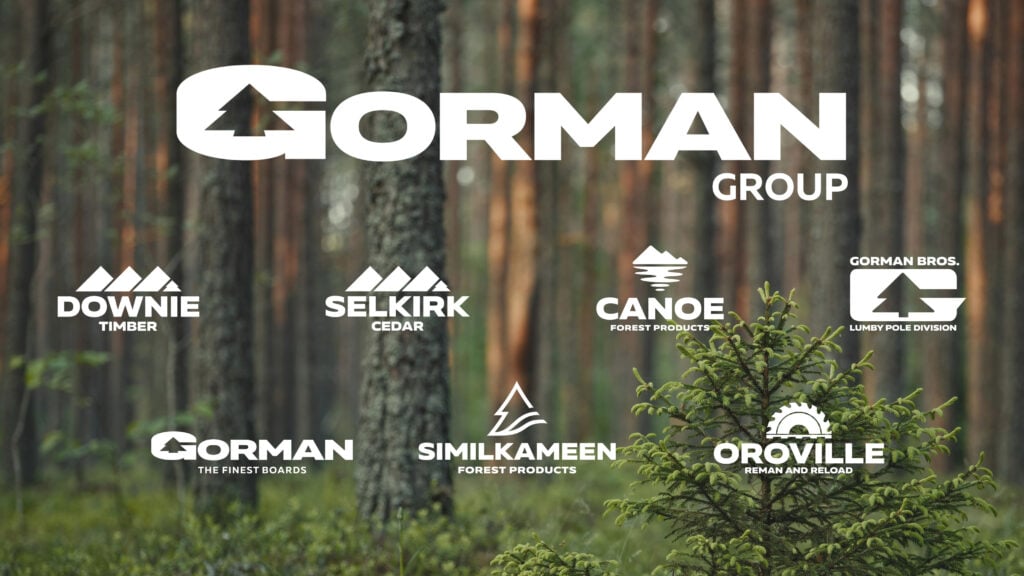
The Gorman Group — a diversified family of products and operations based in West Kelowna, BC, delivering performance, consistency and value across every market served.
The proximity of operations allows for movement of fiber, drying capacity and finished products between mills, improving overall system efficiency. At the Downie Selkirk operation in Revelstoke, the company produces Cedar, Douglas Fir, Spruce and Hemlock products for distribution across a broad range of markets.
“We’re a four-species producer with about 1,700 SKUs,” said Sales Manager Landon Erbenich. “We’re cutting everything from decking and siding to Japanese programs and specialty patterns.”
Selkirk also supports the West Kelowna facility by supplying rough blanks for further processing. “We’re always chasing the best value for the log,” Erbenich said. “Sometimes, that means doing things others wouldn’t attempt at scale.”
The operation has also focused on niche product development and customized programs. “We’re invested in the details to bring a more consistent product,” Erbenich offered.
Company leadership emphasized that long-term employee retention and internal development remain central to operations. “It’s a family-owned company, and it feels like one,” Malone said. “We promote from within, and people grow together here.”
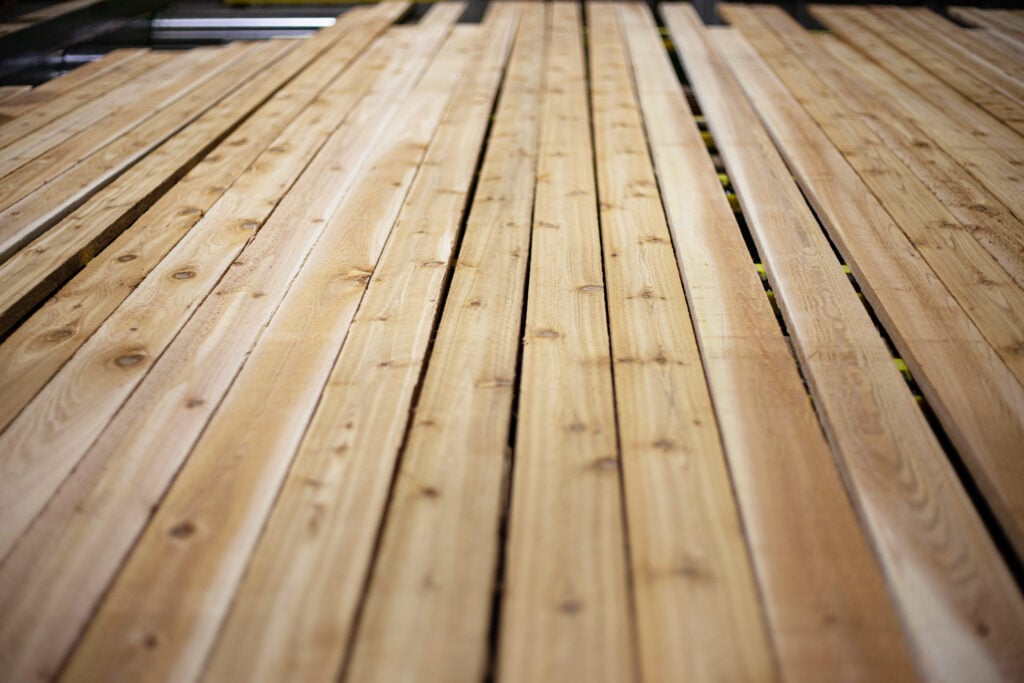
Selkirk® Cedar products showcase high-quality fiber, precision milling and consistent finish.
Many employees have decades of experience within the organization, moving through multiple roles over time. “It’s the people,” Erbenich said. “It’s a great place to work and raise a family, and they value your input.”
Arkle noted that the company’s culture supports decision-making and accountability at all levels. “We inherited a culture, and the strategy came out of that,” Arkle said.
That culture extends to customer relationships as well. “The lumber industry sells billions of dollars of lumber on a handshake,” Arkle said. “That builds trust and long-term relationships.”
Looking ahead, the company expects continued pressure on timber supply and increasing competition across both commodity and value-added markets. “This industry is transforming,” Arkle said. “It’s more than just logs to lumber, there’s biofuels, mass timber and new applications. We need people who can see where it’s going in 15 years,” such as Ashlee Cribb, Gorman’s incoming CEO. “Gorman’s reputation has been built over decades on consistency and trust, but what differentiates us today is how we handle complexity. We intentionally take on challenges others avoid and convert them into reliable, high-performing solutions that create measurable value for our customers,” said Cribb, who emphasized that the company’s agility and ability to manage complexity will remain central to its strategy moving forward. Cribb will assume leadership of the company on July 1, 2026.
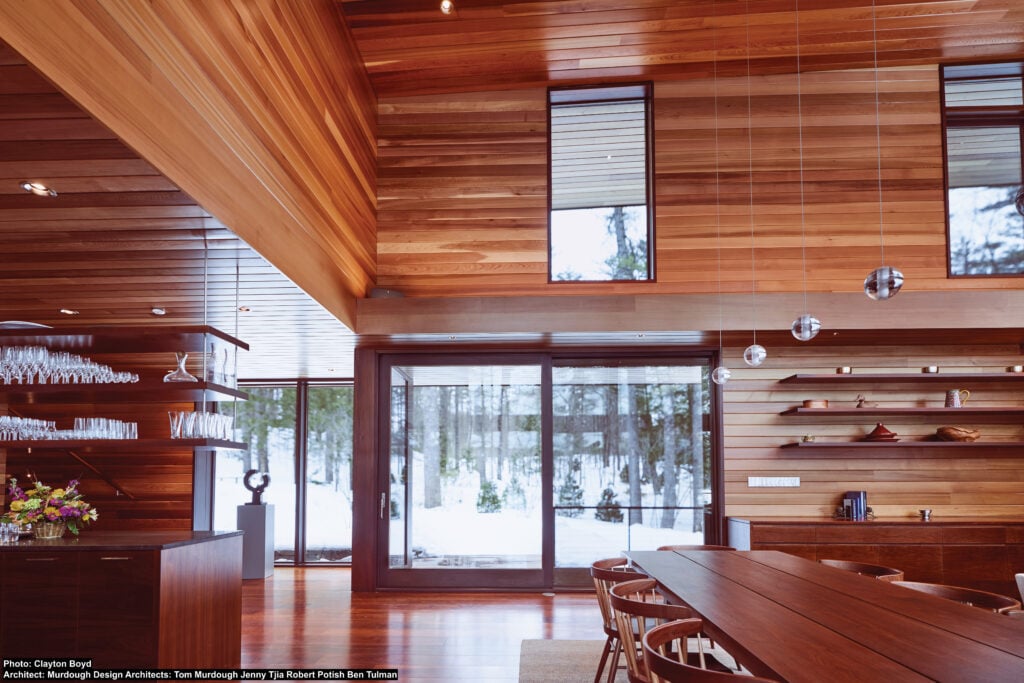
Selkirk® specialty products deliver high-quality Cedar solutions for diverse architectural applications.
Gorman’s focus will remain on value recovery, product consistency and leveraging its multi-mill system to adapt to changing market conditions. “At the end of the day,” Malone said, “our customers know what they’re going to get, and they get one of the highest value products in the industry.”
Gorman Group participates in industry events and organizations including the North American Wholesale Lumber Association and the Montreal Wood Convention, while also supporting initiatives through BC Wood and customer-focused open house events across its distribution network.
For more information, visit GormanBros.com.