A New Standard for Leadership: Inside NAWLA’s T-100
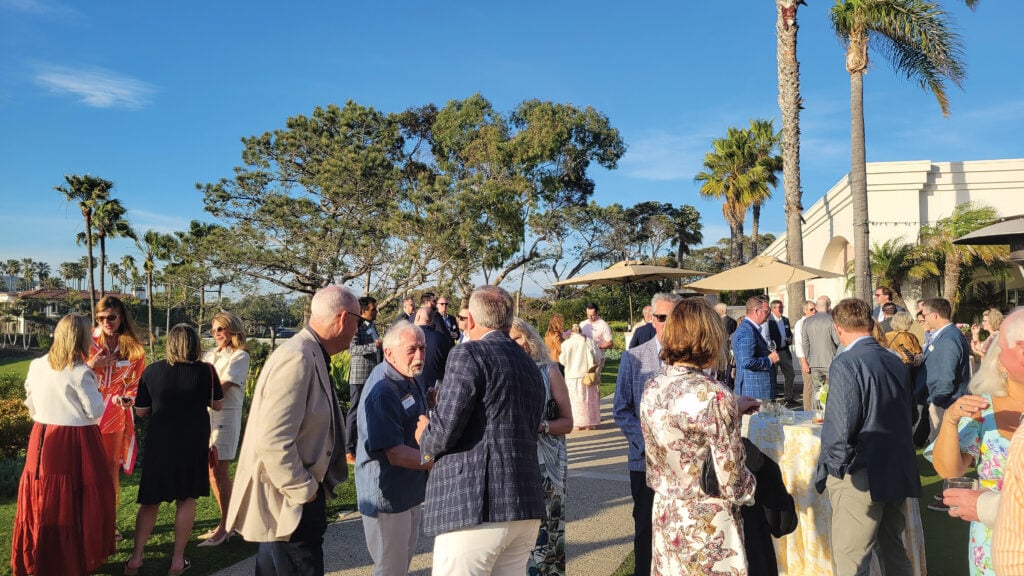
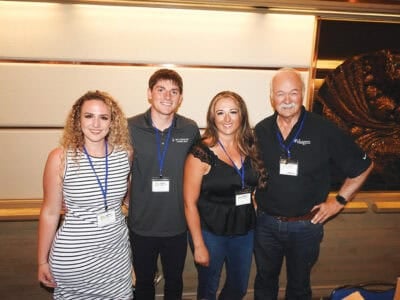
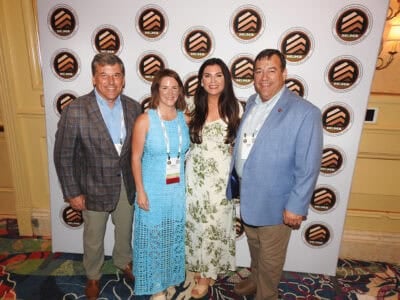
T-100 attendees connect during an evening reception.
NAWLA’s inaugural T-100 took place March 16-18 and brought together senior leaders from across the lumber and building materials distribution channel for a highly focused, executive-level experience centered on connection, perspective, and the future of the industry. Set in Dana Point, California, the event created a purposeful environment for leaders navigating a period defined by uncertainty, innovation, and rapid change.
From the start, T-100 was designed to feel different. Rather than a traditional conference filled with large sessions and packed agendas, the experience emphasized smaller, more meaningful interactions. The goal was to give executives space to step back from day-to-day demands and engage in thoughtful conversations about where the industry is headed and how they can help shape it.
That intention was clear throughout the program. Discussions focused on the realities leaders are facing today, from economic volatility and supply chain disruption to shifting customer expectations and the growing influence of technology. While the challenges were complex, a common thread emerged: success in this environment requires both adaptability and strong, trusted relationships.
One of the most talked-about moments of the event was the “Breakfast of Champions” panel, which quickly became a standout session among attendees. Bringing together leaders from adjacent industries, the panel featured moderator Matt Phillips; Abe Eshkenazi, CSCP, CPA, CAE, chief executive officer of the Association for Supply Chain Management; Eric Hoplin, president and chief executive officer of the National Association of Wholesaler-Distributors; and Anne Chettle Reinke, president and chief executive officer of the Intermodal Association of North America, and offered a broader view of the forces influencing supply chains and distribution. The conversation explored how trends like automation, logistics innovation and evolving distribution models are reshaping how businesses operate — not just within lumber, but across the entire channel.
The session resonated because it expanded perspective. By looking beyond the immediate industry, attendees gained insight into how interconnected systems are driving change and what that means for their own strategies. It reinforced the idea that staying competitive requires awareness not only of internal challenges, but of the larger ecosystem in which the industry operates.
While sessions like Breakfast of Champions delivered valuable insight, much of the impact of T-100 came from the conversations happening in between. Whether during structured discussions or informal exchanges, attendees had the opportunity to connect directly with peers facing similar challenges. These candid interactions created a level of openness and practicality that is often difficult to achieve in larger settings.
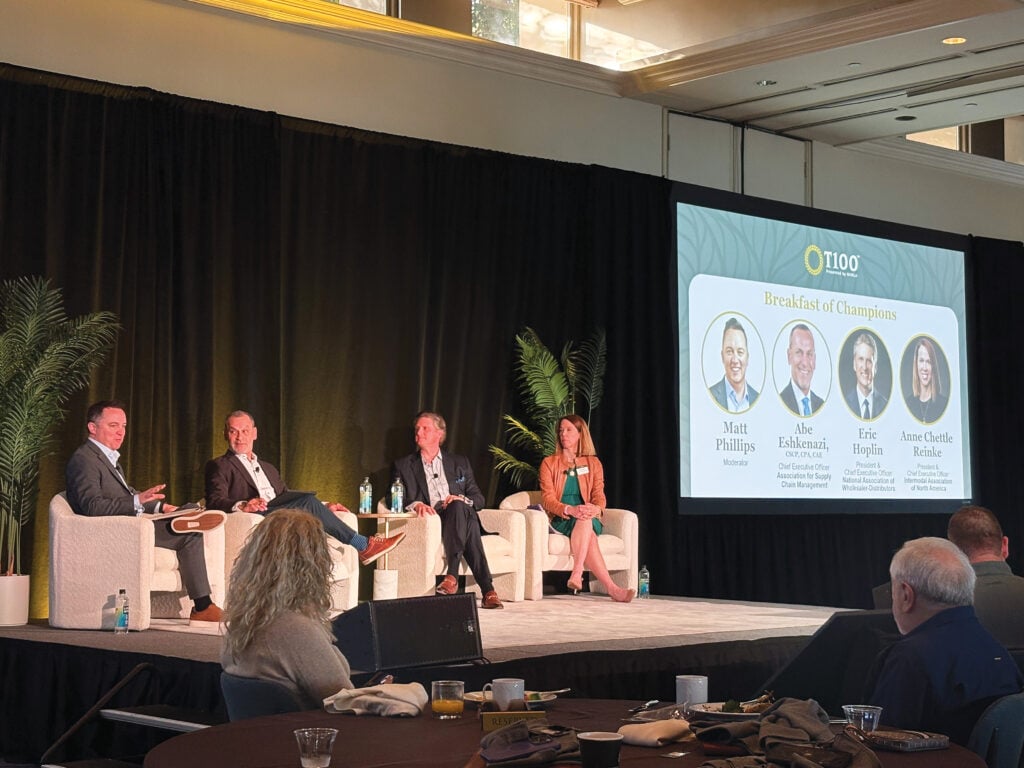
Breakfast of Champions panel, from left: Matt Phillips, Abe Eshkenazi, Eric Hoplin and Anne Chettle Reinke.
During the opening, NAWLA Board Chair Judy Haney underscored the purpose behind the event: “T-100 was built to bring together influential leaders from across the channel to connect, collaborate and collectively drive the future success of our industry.”
That focus on connection carried throughout the experience. Attendees weren’t just listening, they were actively contributing, exchanging ideas, and learning from one another’s perspectives across different markets and business models.
T-100 Committee Chair Brian Boyd reinforced this approach: “This event reflects NAWLA’s commitment to creating intentional, executive-level environments that support strategic thinking and industry leadership.”
The structure of the event supported that goal. By prioritizing dialogue over presentation, T-100 encouraged participants to engage more deeply with the content and with each other. Leaders explored not only the challenges they face, but also how their approaches compare, and where opportunities may exist moving forward.
That exchange of perspective proved to be one of the most valuable takeaways. Hearing how others are navigating similar uncertainty gave attendees a broader understanding of the market and new ways to think about their own strategies. It also highlighted the diversity of approaches across the channel, shaped by differences in geography, business model and customer base.
The strength of the experience was further reflected in the connections formed. Many participants left having built new relationships that they expect will continue beyond the event, creating opportunities for ongoing collaboration and shared insight.
As the inaugural T-100 concluded, it was clear that the event had successfully introduced a new kind of leadership forum for the industry — one built on meaningful conversation, strong relationships, and expanded perspective.
Within NAWLA’s broader ecosystem, T-100 represents the executive-level pinnacle of a thoughtfully designed career journey. From early-career engagement through programs like mentorship, Wood Basics and Young Emerging Lumber Professionals Program (YELP), to management-focused opportunities such as Traders Market and Regional Meetings, and ultimately to executive development through the Executive Management Institute and T-100, NAWLA continues to invest in leaders at every stage. Complemented by ongoing opportunities like 10 Groups, committee participation and NAWLA Academy, this progression reflects a holistic approach to supporting both individual growth and industry advancement.
For NAWLA, T-100 represents a continued investment in bringing leaders together in ways that matter. And if this first year is any indication, it’s poised to become a key space for executive-level engagement, where the conversations shaping the future of the lumber and building materials distribution channel truly begin.