NAR Report: Baby Boomers Remain Largest Share Of Home Buyers As First-Time Buying Falls To Record Low
Only about one in five buyers were first-time purchasers
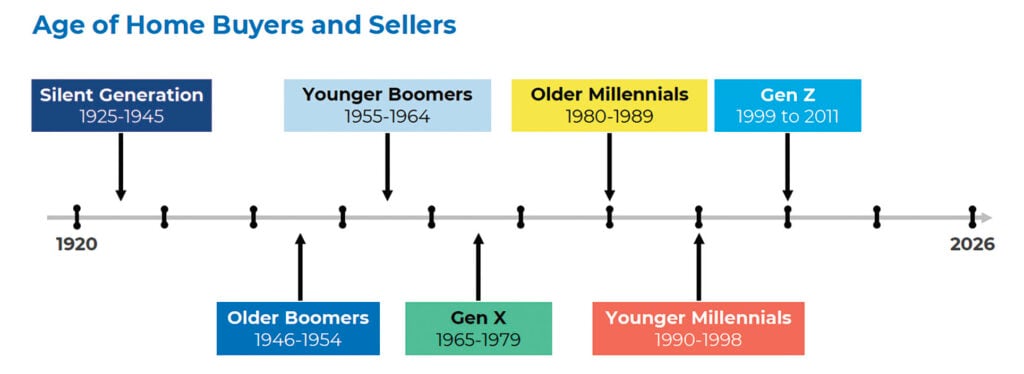
Baby Boomers remained the largest generational group of home buyers this year, while the share of first-time buyers fell to the lowest level on record, according to the 2026 Home Buyers and Sellers Generational Trends report from the National Association of REALTORS® (NAR).
The report examines the similarities and differences among recent home buyers and sellers across generations. Among all home buyers in the past year, the generational breakdown was as follows:
• Gen Z: 4 percent (up from 3 percent last year)
• Millennials: 26 percent (down from 29 percent last year)
• Gen X: 25 percent (up from 24 percent in 2025)
• Baby Boomers: 42 percent (unchanged from last year)
• Silent Generation: 4 percent (unchanged from last year)
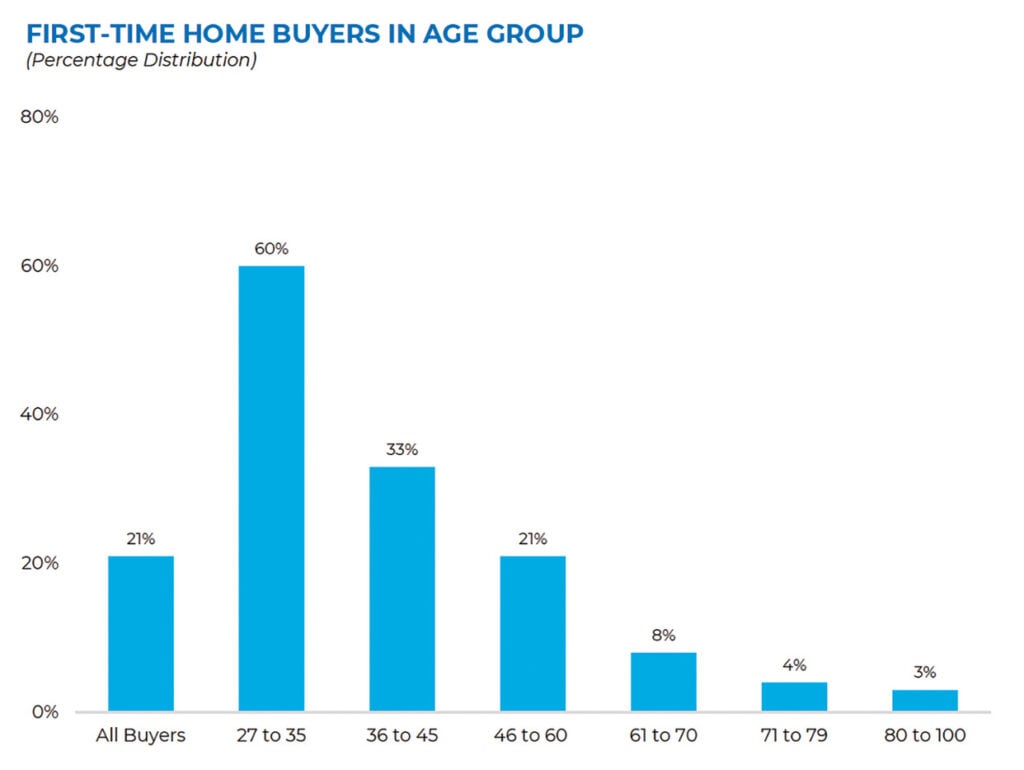
First-time buyers made up just 21 percent of all home buyers, down from 24 percent in the previous survey and the lowest share since NAR began collecting the data in 1981. Among buyers in each generation, the share who were first-time purchasers was:
• Younger Millennials: 60 percent (down from 71 percent last year)
• Older Millennials: 33 percent (down from 36 percent last year)
• Gen X: 21 percent (up from 20 percent last year)
• Younger Boomers: 8 percent (down from 9 percent last year)
• Older Boomers: 4 percent (unchanged from last year)
• Silent Generation: 3 percent (down from 5 percent last year)
“The housing market remains sharply divided between homeowners with equity and first-time buyers trying to break in—many of whom are younger Millennials,” said NAR Deputy Chief Economist Dr. Jessica Lautz. “For many younger households, affordability challenges and limited inventory are still making homeownership difficult to achieve.”
Millennials continue to lose market share overall. However, older Millennials are leveraging equity to become move-up buyers. These older Millennials had the highest median household income of any generation at $132,700, bought the largest homes with a median of 2,100 square feet, and were far less likely to be first-time buyers than younger Millennials.
“Older Millennial buyers are now entering middle age, and with that comes a shift,” Lautz said. “This cohort is now the highest-earning generation of home buyers, buys the largest homes and is most likely to have children living with them. Those traits were once more commonly associated with Gen X buyers, who are now increasingly looking toward empty-nesting and retirement.”
Multigenerational homes are declining in overall market share. Across all buyers, 14% purchased a multigenerational home (down from 17% last year), with top reasons including caring for aging parents, cost savings, and adult children moving back home. Among buyers in each generation, the share who purchased a multigenerational home was:
• Younger Millennials: 9 percent (up from 7 percent last year)
• Older Millennials: 14 percent (up from 12 percent last year)
• Gen X: 19 percent (down from 21 percent last year)
• Younger Boomers: 14 percent (down from 15 percent last year)
• Older Boomers: 11 percent (down from 13 percent last year)
• Silent Generation: 16 percent (down from 21 percent last year)
Among Gen Z home buyers, the youngest generation in the market, key findings include:
• 35 percent of Gen Z buyers were single females—the highest share among all generations
• 17 percent of Gen Z buyers were unmarried couples—the highest share among all generations
“What stands out about Gen Z is how confidently they’re beginning to define homeownership for themselves,” Lautz said. “They may still be a small share of the market, but they’re already challenging old assumptions about who buys a home and when. For many of these buyers, marriage and children are no longer the defining milestones before a home purchase. The driving force is simply the desire to own a home of their own.”
On the selling side, Baby Boomers also remained dominant, making up 55 percent of all home sellers. Across all generations, sellers typically stayed in their homes for 11 years before selling, while Younger Millennials sold after five years and Older Boomers typically sold after 15 years.
“Baby Boomers are at a point in life when they have the flexibility to move, often with housing equity to help purchase their next home,” Lautz said. “In earlier years, Baby Boomers—like Millennials today—may have moved because of a job change or the need for a larger home. Today, many Baby Boomers are embracing choice and moving to be closer to friends and family, to downsize, or to retire and enjoy a work-free lifestyle.”
Even as generational patterns differ across the market, buyers and sellers alike continue to rely heavily on real estate agents.
Eighty-eight percent of all buyers purchased their homes through an agent. Buyers continued to show strong confidence in their agents, with 91 percent saying they would use their real estate agent again or recommend them to others. This was especially strong among Older Boomers (90 percent) and the Silent Generation (92 percent).
On the selling side, 91 percent of sellers worked with an agent, and homes typically sold for a median 99 percent of the final list price. Among sellers, Older Millennials were the most likely to use an agent at 92 percent. Younger Millennial sellers were among the strongest performers on price, with 19 percent selling for 101 percent to 110 percent of list price and 11 percent selling for more than 110 percent of list price.
Methodology
NAR mailed a 120-question survey to 173,250 recent home buyers in July 2025 using a random sample weighted to be representative of sales across geographic areas. Home buyers had to have purchased a primary residence between July 2024 and June 2025. The survey received 6,103 responses from primary residence buyers. After accounting for undeliverable questionnaires, the survey had an adjusted response rate of 3.5 percent. Data gathered in the report is based on primary residence home buyers. According to the REALTORS® Confidence Index, 84 percent of home buyers purchased as primary residences in 2024, accounting for 4,746,000 homes sold that year (new and existing homes combined). Using that calculation, the sample at the 95 percent confidence level has a confidence interval of ±1.25 percent.