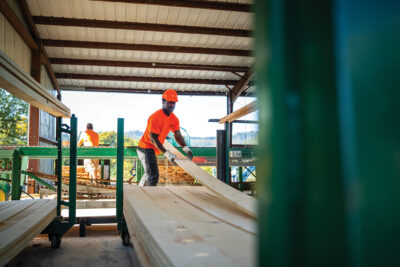
The SLB’s Investments Are Critical For Both Developers And Lumber Producers

Credit: Raftermen Photography
As Managing Director of Timberland and Innovative Wood Products at Jamestown, I wear two distinct hats that reflect the dual priorities of our business.
As a forester, I oversee our investors’ timberland portfolio of nearly 90,000 acres spanning Georgia, Alabama, Pennsylvania, New York, and Indiana. I deeply understand the critical importance to landowners of strong, healthy markets for forest products. Healthy markets drive well-managed and sustainable forestry practices, which in turn lead to healthier forests.
Jamestown is committed to sustainable forest management, which makes us naturally aligned with the Softwood Lumber Board’s (SLB’s) mission to grow demand for lumber. Jamestown Timberland embraces this vision wholeheartedly, as it strengthens our ability to preserve and advance our forests while supporting rural economies and communities.
A Developer’s Dual Perspective
My second role, focused on innovative wood products, is unique because Jamestown is also a commercial real estate developer. Sustainability is deeply rooted in our values and is critical to our investors. We are acutely aware that the built environment is responsible for approximately 40 percent of global carbon emissions—11 percent of which are directly attributable to building materials and construction.
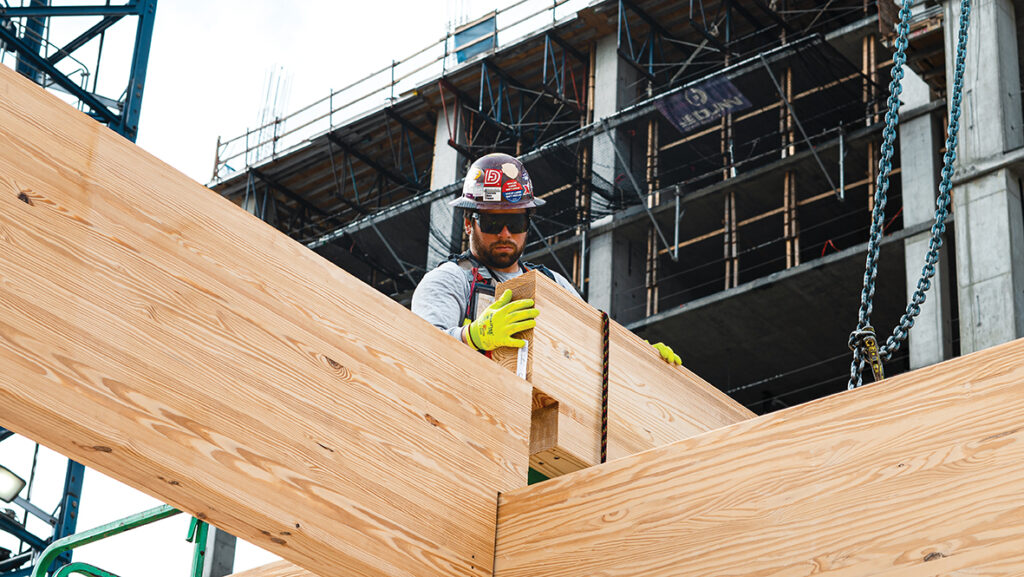
Jamestown’s 619 Ponce was built with mass timber, in part to lower the building’s carbon footprint. Credit: Georgia Forestry Foundation.
Historically, Jamestown has focused on adaptive reuse or “recycling old buildings,” with successful projects like Ponce City Market in Atlanta and Chelsea Market in New York City. However, we asked ourselves an important question: If we cannot always recycle older buildings, what else can we do to lower our carbon footprint? As stewards of timberlands, the answer was obvious: build with mass timber.
Jamestown’s Mass Timber Journey
Our mass timber journey began with curiosity and quickly transformed into action through the critical support of WoodWorks. WoodWorks played a central role in helping us go from early interest to the completion of our first mass timber building at Ponce City Market right here in Atlanta. This milestone is particularly special, as the timber used was sourced primarily from the land we manage.
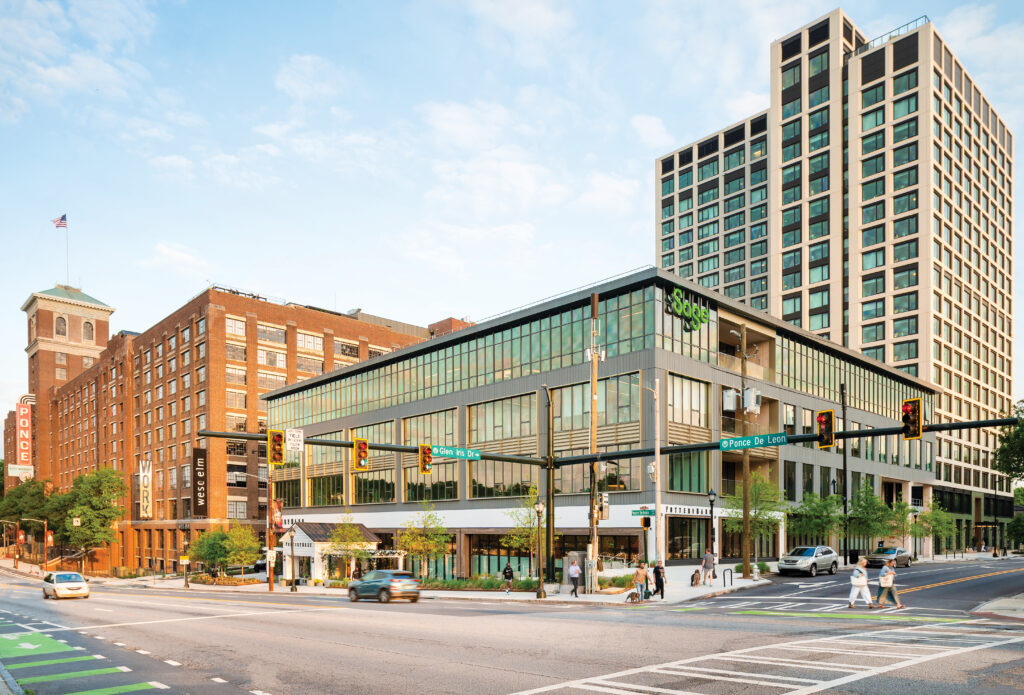
Jamestown’s work on 619 Ponce was supported by WoodWorks, enabling advocates like Harris to share his knowledge and confidence in wood design with others. Credit: Jamestown.
Jamestown’s project is a powerful example of the SLB’s “Niche to Mainstream” strategy in action—where early adopters like us help prove mass timber’s viability and unlock wider demand. By showcasing what’s possible, we’re not just building projects; we’re accelerating a market shift.
When Jamestown started exploring mass timber, I was already heavily involved—attending events, engaging in educational sessions through WoodWorks, and collaborating with organizations like the Georgia Forestry Foundation.
Pitching mass timber to stakeholders and investors wasn’t without its challenges. Questions such as “What about fire?”, “Are we going to destroy the rainforest?”, “Where do we source the product?”, and “Who else is doing this?” came up repeatedly. The exceptional guidance and easily accessible information provided by the WoodWorks team were instrumental in addressing these questions and concerns.
The Multiplier Effect of WoodWorks’ Support
WoodWorks’ support has not only equipped me with the knowledge and confidence to become a champion for wood construction but also allowed me to pass that knowledge broadly throughout our industry. Their resources serve as a multiplier, enabling advocates like me to empower others with the belief and tools needed to embrace timber-based development.
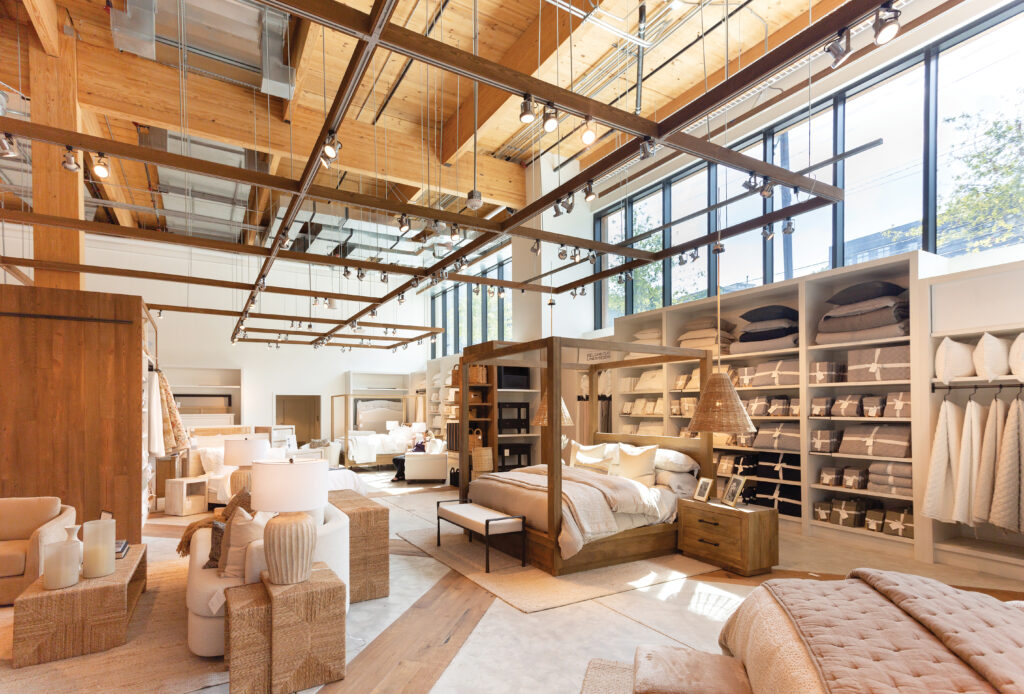
Pottery Barn was 619 Ponce’s first announced tenant. Credit: Jamestown.
A great example is the Georgia Mass Timber Accelerator Program, which I chair through the Georgia Forestry Foundation and which is supported by the Softwood Lumber Board. Through direct grants and project assistance, this program is driving bold, innovative wood design by architects and developers, helping them turn visionary concepts into reality. I’ve seen firsthand the powerful impact these accelerators can have in inspiring and educating industry professionals.
I’m also deeply supportive of the SLB’s focus on increasing wood design education in architecture and engineering schools. Personally, I’ve spoken at Auburn, Georgia, Clemson, Boston University, and Georgia Tech, sharing my passion for wood construction and inspiring the next generation of architects and engineers. Whether through presentations or tours of Ponce City Market, I work to spark excitement for mass timber and equip students with the knowledge they need to design innovative wood buildings in the future.
Why the SLB’s Vision Is Key
The SLB’s vision isn’t just one I admire—it’s one I believe in. That’s why I’m honored to have been nominated to the Board of Directors as one of the first public members. I see firsthand how the SLB opens new markets for lumber producers and landowners, empowers developers to choose wood, and inspires a new generation of design professionals. Its programs deliver measurable, scalable impact—and now it’s up to us, the investor community, to keep that momentum going. Sustained support means expanding our reach, defending market share, and converting opportunities into long-term value for our industry.