Restoring History With Eastern White Pine
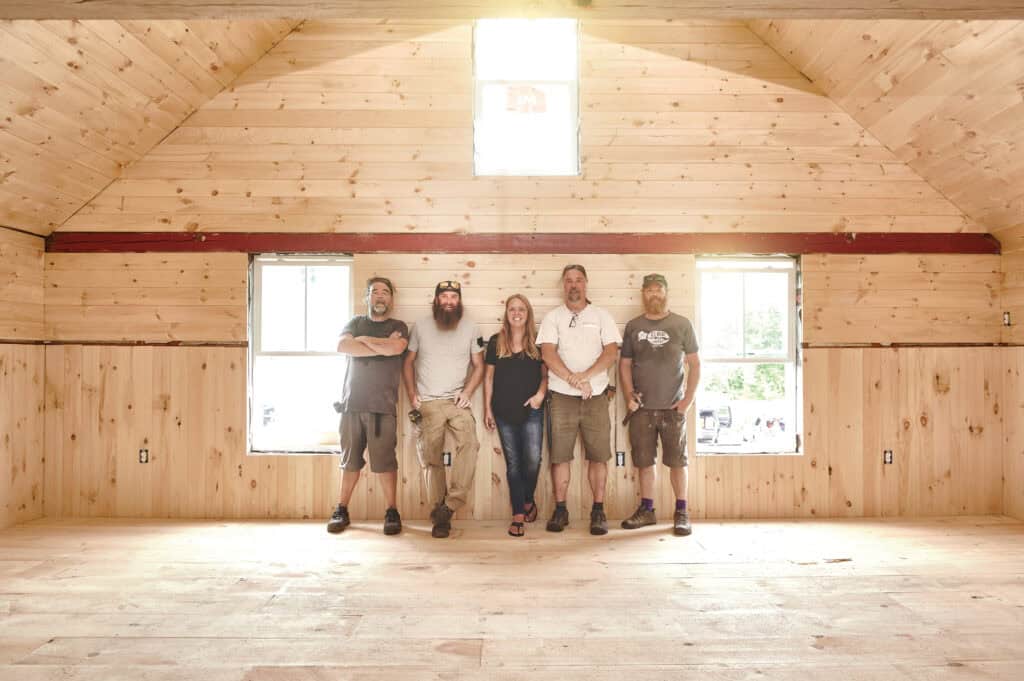
The Maine Cabin Masters, as seen on Magnolia, were instrumental in both the Monmouth Fire House rebuild and the use of Eastern White Pine.
For more than a century, fire has shaped the story of Monmouth, Maine.
During the 1800s, multiple devastating fires destroyed mills, businesses, and homes throughout the small community. After one especially destructive fire in 1888 left 18 families homeless and more than a dozen businesses in ruins, the town established the Monmouth Fire Department in 1903.
More than 100 years later, one of the department’s original fire houses faced a different threat: deterioration. Rather than lose an important piece of local history, Monmouth Volunteer Fire Chief Daniel Roy led an effort to save the building and return it to the community.
Saving More Than A Building
Roy first noticed demolition work beginning on the aging structure while driving through town. Although the owner planned to remove the building and redevelop the property, Roy envisioned something different: restoring the historic firehouse as both a museum and gathering place for the volunteer firefighters.
After attempts to secure town support fell short, the firefighters took matters into their own hands. They established a nonprofit organization, launched community fundraising efforts, and purchased the property to begin the restoration.
As the project gained momentum, Roy reached out to the Maine Cabin Masters, whose restoration work throughout the state has become well known for preserving Maine’s architectural heritage. The team embraced the project, seeing it as an opportunity to preserve a landmark that meant so much to the community.
The building was lifted from its foundation, new footings and concrete were installed, and volunteers contributed wherever possible. Throughout the rebuild, one material became central to restoring the firehouse’s original character: Eastern White Pine.
Building With Maine’s Wood
Eastern White Pine has been a part of New England’s history for centuries. Known for its tall, straight growth, it helped build ships, homes, mills, and communities across the region. As Maine developed, Eastern White Pine became one of its defining building materials, making it a natural choice for an authentic restoration.
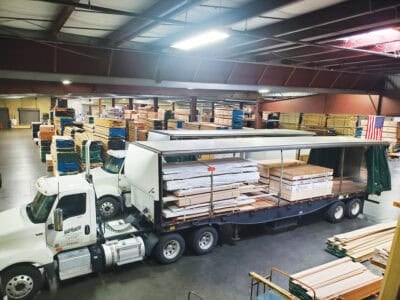
The Maine Cabin Masters have long relied on Eastern White Pine in their projects through their partnership with the Northeastern Lumber Manufacturers Association (NELMA). For the Monmouth Firehouse, Robbins Lumber of Searsmont, Maine, donated the Eastern White Pine needed to help restore the building.
Rather than introducing modern materials that would change the character of the structure, the project used the same regionally sourced species that has been part of Maine’s architectural identity for generations.
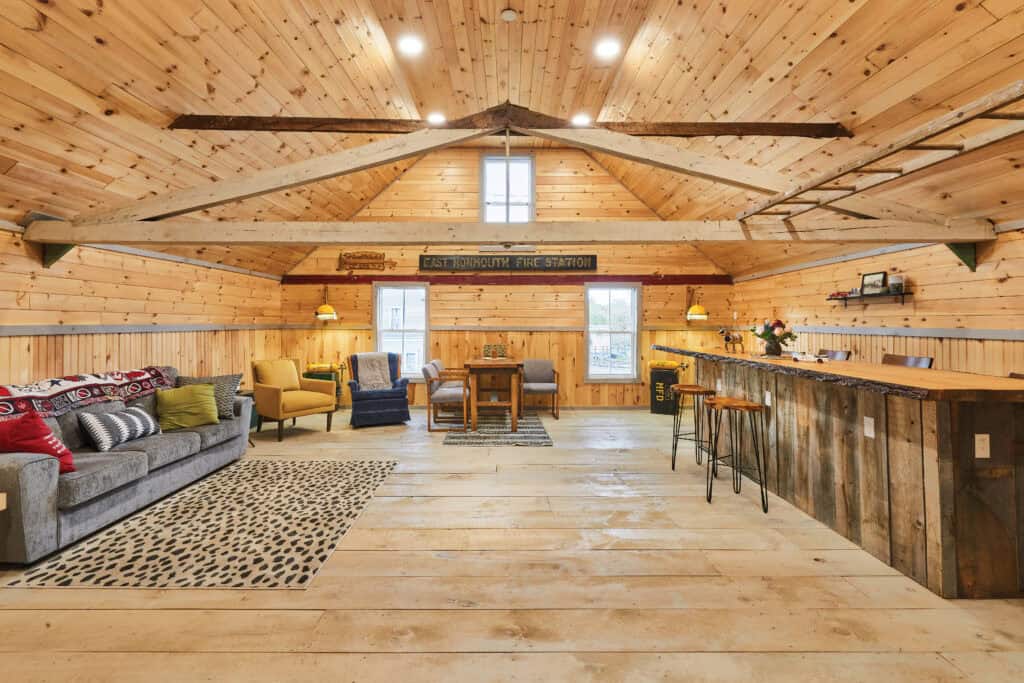
The original Monmouth Fire House featured Eastern White Pine throughout, so it only made sense that the rebuild would feature the regionally grown species. New windows allow the natural light to be reflected and to glow in the new space.
A Space Transformed
Today, visitors immediately notice the warmth of Eastern White Pine throughout the firehouse.
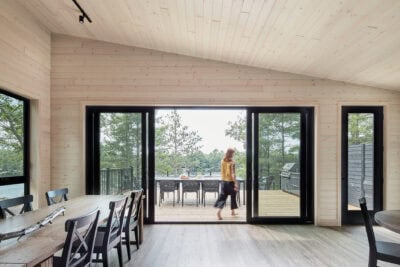
The museum’s first floor welcomes guests with Pine walls that complement the building’s historic displays. Upstairs, however, the transformation is dramatic. The formerly flat ceiling was replaced with a vaulted design finished in Eastern White Pine, while new windows fill the room with natural light reflected throughout the space by the wood itself.
Original features, including the historic hose tower once used to dry fire hoses above the stream flowing beneath the station, remain integrated into the design. Rough Pine flooring completes the authentic appearance, creating a space that feels both historic and welcoming.
“The impact is impressive,” Roy said. “You can still smell the White Pine, and everyone loves the real smell of it. We were able to bring in the sunlight through the two windows, which reflects off the wood and is just gorgeous.”
Beyond its beauty, Eastern White Pine also supports regional manufacturing and local forestry while reducing transportation distances compared to materials shipped from farther away. Its workability, durability, and unmistakable appearance continue to make it a favorite for restoration projects throughout the Northeast.
A Lasting Legacy
The restored firehouse has become one of Monmouth’s most treasured landmarks. Visitors touring the town’s historic district now stop at the museum, while the second floor once again serves the volunteer firefighters who helped save the building.
For the Maine Cabin Masters, the project represented exactly what preservation is all about.
“The Monmouth Firehouse was the perfect partnership and project for us,” said Chase Morrill. “Preserving history is so important to us. The chance to make a real difference for Monmouth and create something that will stand the test of time was a real treat. The fact that we were able to rebuild this gorgeous structure using an original material, thanks to Robbins Lumber and our partnership with NELMA, was the icing on the cake.”
Roy agrees. “So many people jumped in to help make this project happen,” he said. “Together, we built a lasting monument for Monmouth, something that will be here for people to enjoy for a very long time.”
To learn more about the Northeastern Lumber Manufacturers Association, visit nelma.org.