Choosing Between Stain, Paint, or Sealer for a Pressure-Treated Deck
A Guide to Protecting and Enhancing Your Pressure-Treated Deck
A deck is more than just a backyard space, it’s an extension of your home and a setting for entertaining friends, relaxing with family, and enjoying the outdoors. For deck construction, the materials and finish you choose play a key role in its aesthetic and how well it will stand up to years of weather, wear, and use. That’s why selecting the right wood and knowing how to properly protect it are essential first steps.
Across North America, homeowners are choosing pressure-treated wood for deck projects because it is tough, reliable, and built to withstand everything from scorching summer sun to freezing winter storms. Therefore, if you’re building new or refreshing the old, pressure-treated wood delivers the kind of strength and staying power regular lumber simply can’t. It sets the stage for a deck designed to last for years to come.
However, for its long-term protection, homeowners must decide between paint, stain, or sealer. Each option offers distinct benefits from enhancing and protecting the natural wood grain to delivering durable, long-lasting color.
Bring Out the Grain: Staining for Natural Beauty and Subtle Color
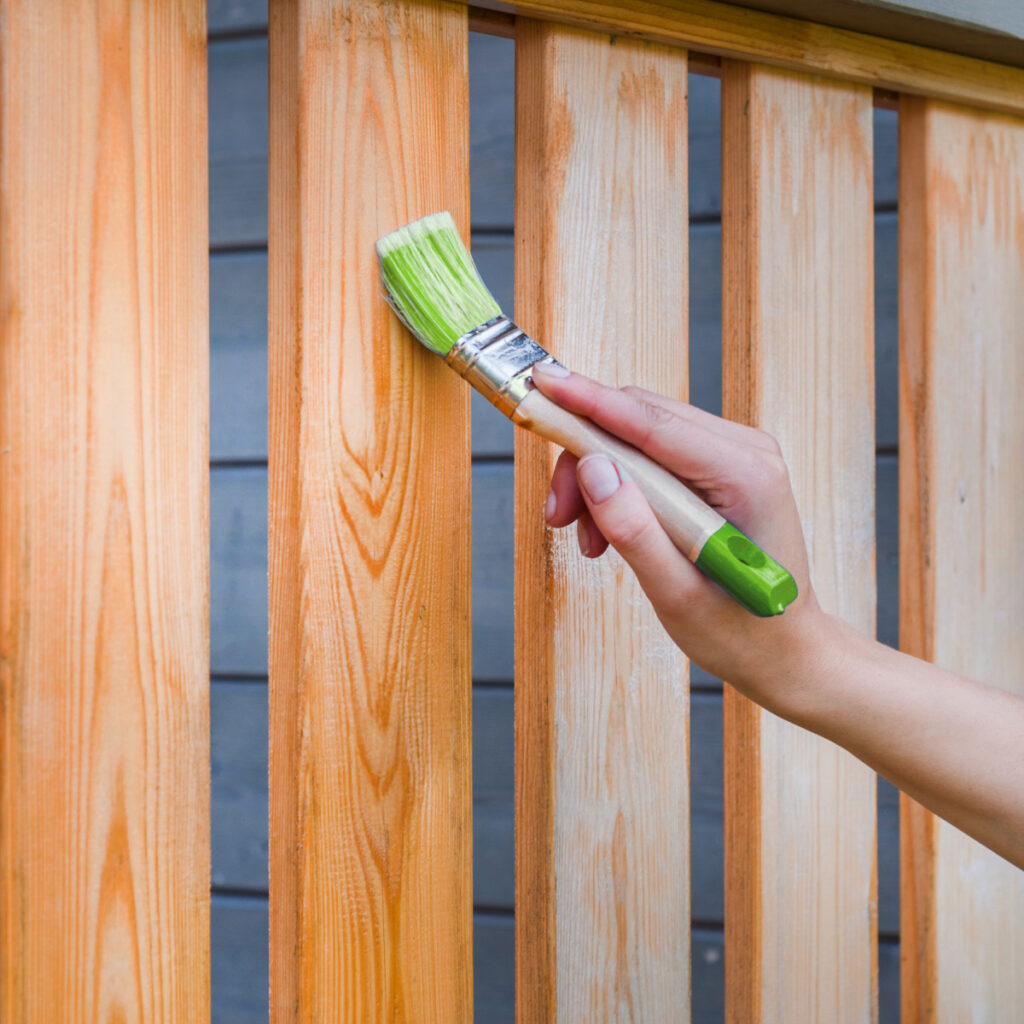
If you’re looking to enhance the natural beauty of a pressure-treated deck, staining is a popular choice. Unlike paint, stain penetrates the wood, allowing the texture of the grain to show through. Stains are available in a range of transparent, semi-transparent, and semi-solid shades, providing color without completely concealing the natural beauty of the wood. In addition to maintaining aesthetics, staining offers moderate protection against water, UV damage, and mildew.
However, staining does require periodic maintenance, as both the color and protective qualities can fade over time. Depending on factors such as sun exposure, rainfall, and deck usage, reapplication is generally needed every one to three years. Although staining is easier to apply than paint, proper surface preparation is still essential, including cleaning and potentially light sanding, because pressure-treated lumber can have surface residues from its treatment. It is important to ensure the wood is fully dry before staining, keeping in mind that freshly treated lumber may need several months to cure.
Overall, staining offers a balanced approach, enhancing the wood’s natural beauty while providing reliable protection, though it does demand more frequent upkeep than paint.
Color, Protection, and Challenges: What to Know Before You Paint
Painting a pressure-treated deck comes with some serious perks. It delivers rich, full color that can hide imperfections and give your deck a flawless, polished look. Paint allows homeowners to unlock virtually any color to deliver a bold, uniform finish or to pair with other exterior design choices. Beyond aesthetics, it acts like armor against the elements, blocking harmful UV rays and forming a tough moisture barrier to minimize the risk of warping, cracking, or mildew.
While painting a pressure-treated deck offers many benefits, there are some important considerations.
Pressure-treated wood naturally expands and contracts as it dries, ages, and reacts to nature’s elements. This can cause the paint to peel or chip, especially if applied before the wood is fully dry. Painting also requires more preparation than staining or sealing, including cleaning, sanding, and priming. Skipping these steps can lead to poor results. Keep in mind that once a deck is painted, reversing the process is difficult because paint fills the wood’s pores and makes switching to stain or a sealer challenging. In addition, if the paint film cracks or moisture seeps underneath, it can lead to blistering, peeling, and rot over time.
Painted surfaces can also become slippery when wet, posing a safety concern in areas around pools or in damp climates. Finally, although paint is long-lasting, once it begins to fail, the entire surface often requires comprehensive stripping or sanding rather than just simple spot touch-ups. While paint can last longer, its maintenance is typically more time consuming and labor intensive.
Lasting Protection: The Benefits of Sealing Your Deck
Sealing a pressure-treated deck protects the wood while maintaining its natural color and texture. Clear or lightly tinted sealers penetrate the wood to form a protective barrier that repels water, fights mold and mildew, and minimizes moisture damage. Unlike paint, sealers are less likely to peel or crack because they soak into the wood rather than simply sitting on the surface.
However, sealing a deck requires periodic upkeep, as the protective layer naturally wears down over time. Typically, resealing is needed every one to two years, depending on sun, rain, and how often the deck is used. Proper preparation is key: clean the surface thoroughly and ensure the wood is fully dry before applying the sealer. While it doesn’t alter the deck’s natural appearance as much as paint or stain, sealing still provides reliable protection, though it may require attention even sooner than the alternative methods.
Choosing a Finish: Balancing Beauty and Protection
Selecting the right finish for your deck, whether painting, staining, or sealing, goes beyond simply picking a color or shade. Factors like the type of wood, its age, and how much sun, moisture, and foot traffic all influence how well a finish will protect and perform over time.
Homeowners and builders also need to think about style. Is the goal to showcase the wood’s natural grain or give it rich, lasting color?
Maintenance is another key consideration, as some treatments demand more frequent touch-ups than others. When you also weigh budget, ease of application, and long-term durability, choosing the right finish becomes a careful balance between beauty, protection, and practicality – ensuring your deck not only looks the part but stands up to the elements for years to come.