Cities Become New Front Line for Lumber Market Expansion
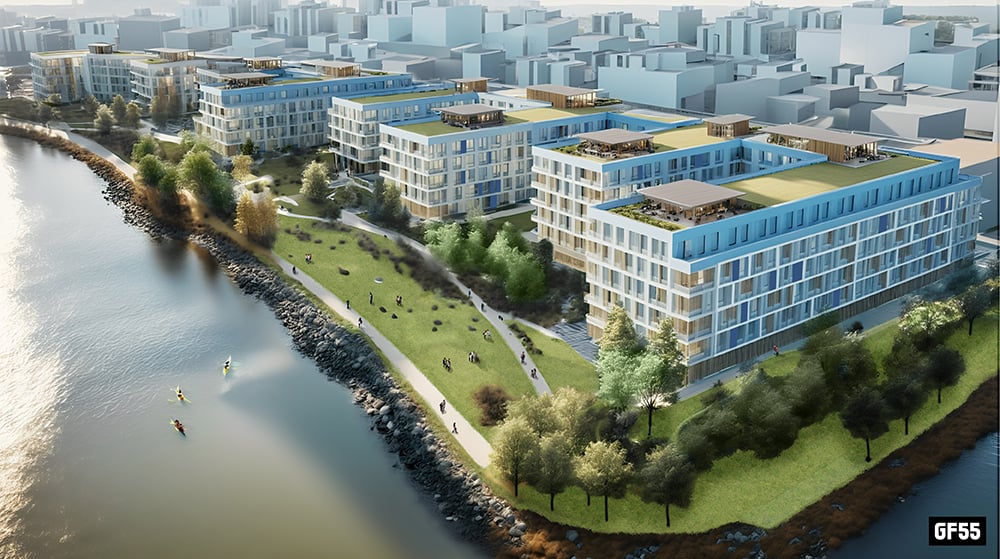
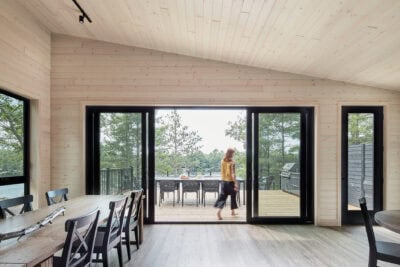
Stapleton Waterfront Residential. Credit: GF55 Architects
The Softwood Lumber Board’s strategic plan, “From Niche to Mainstream,” sets an ambitious but achievable target of 2.9 BBF of incremental annual lumber demand by 2035 by prioritizing investments in high-growth, high-impact sectors. A key element of this approach is a focus on cities and regions where the potential for conversion to wood construction is highest.
The SLB’s Accelerator Cities Program unlocks new lumber demand in those priority markets by combining the efforts of local governments, regional jurisdictions, and the softwood lumber industry to expand opportunities for new projects, remove barriers, and streamline code compliance.
Developed in partnership with the USDA Forest Service and supported by the U.S. Endowment for Forestry and Communities, this public-private initiative provides targeted funding, technical assistance, and local industry engagement to help cities launch and expand wood construction projects. By supporting projects in the earliest phases of planning and design—when material decisions are most influential—the program reduces adoption barriers and increases the likelihood that lumber is chosen at scale.
Leading Cities Provide Proof of Concept
By advancing millions of square feet of potential wood construction, the program’s initial pilots established a model for market share growth. Launched in Boston, New York City, and Georgia, the program combined $1 million in partner funding—leveraging just $200,000 from the SLB—to directly support innovative projects, demonstrating that lumber-based systems can compete in dense, code-sensitive environments.
The SLB is now scaling Accelerator Cities to new, high-impact urban markets across the country. The City of Portland, Oregon’s Housing Bureau launched the Portland Mass Timber Accelerator last year to advance sustainable, affordable housing and commercial development using Oregon’s growing mass timber supply chain. Five developments—a mix of multifamily, mixed-use, and civic projects—are conducting feasibility studies for mass timber buildings to be constructed on city-owned parcels.
“In the midst of an ongoing housing crisis, Portland is eager to support innovative housing development strategies,” said Portland Deputy City Administrator for Community & Economic Development, Donnie Oliveira. “Mass timber represents a unique opportunity to fuse environmental sustainability, workforce development, and faster, more affordable housing development. Portland is grateful to the Softwood Lumber Board and the US Forest Service for partnering with us to move this critical work forward.”
The City of Santa Monica, California’s Mass Timber Accelerator is looking to fund early-stage mass timber design and feasibility work for residential, commercial, and institutional construction. In addition to support from the SLB and USDA Forest Service, the city is partnering with the American Institute of Architects Los Angeles chapter to identify project candidates.
In the New York City mayor’s new “Block by Block” housing plan, released in May, the New York City Economic Development Corporation (NYCEDC) announced a third consecutive year of its Mass Timber Studio, which has become a national model for integrating renewable construction into broader economic development strategies.
After the Mass Timber Studio’s first phase awarded seven projects in early 2024, a second cohort last year included even more ambitious projects. The New York Climate Exchange is projected to be the largest mass timber commercial project in New York City, and Stapleton Waterfront Residential includes 500 affordable and market-rate homes. Engagement from the city’s Department of Buildings and Fire Department is critical to the successful implementation of taller and larger wood projects in the city.
“Addressing New York City’s housing needs requires innovation, strong partnerships, and a willingness to test new approaches,” said NYCEDC Interim President & CEO Jeanny Pak. “The NYC Mass Timber Studio has helped create a pipeline of promising projects while building industry knowledge and confidence in mass timber. We’re excited to continue that work through a third cohort and our partnership with the Softwood Lumber Board.”
A new SLB partnership with C40 Cities helps expand and scale the Accelerator Cities Program. C40 is a network of mayors of the world’s leading cities working together to build healthier, more sustainable cities. The SLB and C40 will convene a group of city leaders to tour mass timber projects and learn how wood construction can help cities boost their economy, achieve affordability goals, and reduce housing costs. Boston; Los Angeles; Miami; New York City; San Francisco; Washington, D.C.; Birmingham, Alabama; Pittsburgh; San Antonio; Cleveland; and Denver are all confirmed participants in the C40 program.
“Cities are laboratories for progress, leading the way on delivering solutions for better buildings and neighborhoods for all who live, work, and play in them,” said Kate Johnson, C40 Cities Regional Director for North America. “As cities explore and adopt sustainable construction strategies, C40 is excited to partner with the Softwood Lumber Board to support local leaders in exchanging best practices, scaling solutions, and delivering results.”
A Blueprint for Accelerator Expansion
The SLB has developed a new Accelerator Model Blueprint as part of a focused outreach strategy to activate new cities, prioritizing cities with the highest potential, long-term opportunity, and readiness to activate.
The Blueprint helps city leaders evaluate how wood construction can support local housing, economic development, and sustainability goals. Each city faces different challenges, requiring a flexible approach to implementation. The Blueprint was created with that reality in mind, providing adaptable, scalable, and modular pathways to tailor the Accelerator framework for local needs.
The SLB serves as the catalyst for the growing network of Accelerator Cities nationwide, and the lumber industry’s continuing investment in the SLB ensures these programs will gain momentum through the SLB’s experience and participation. To learn more and connect your local city officials with the SLB for guidance and resources, visit softwoodlumberboard.org or contact acceleratorcities@softwoodlumberboard.org.