
Ontario Business Trends May 2026 – Middle Eastern Conflicts Affect The Ontario Market
Challenges continue for the hardwood sector, as the attack on Iran disrupted production and shipments of crude oil not only in Iran, but in other countries as well. Prices have risen, causing price hikes at the pumps, which is being felt by everyone. Transportation costs are affected for all goods as rates increase. The surcharges by transportation and container shipping companies mean increased freight rates to the hardwood industry, making it difficult to pass along these added costs to customers. The fallout in the Middle East is closely being monitored to see how it will affect the hardwood industry.
Ash exports to China are in demand, especially for the thicker stocks. Domestic markets are noted as sluggish for kiln-dried Ash, although some contacts mentioned receiving inquiries and orders from new customers.
Some sawmills have reduced Aspen production, while some are producing it as business is decent, and for others it is moving well.
Demand for Basswood was low, but has picked up recently, whereas supply has not. It was noted that the Common grades were scarce for certain thicknesses, due to green prices. As such, mills do not want to cut Basswood at current prices.
Birch is also reported as performing poorly. The cabinet, flooring, wood component and furniture manufacturers are using only small quantities of Birch. Wholesalers also reduced their supplies of this species, basing their purchases on color specifications.
Sawmills are generating green Hard Maple, which was reported as elevated at this time. Prices of Hard Maple grades were mixed, seeing both upward and downward movement. For kiln-dried markets, brown FAS and No. 1 and 2 White are best movers. Demand from flooring plants is slow.
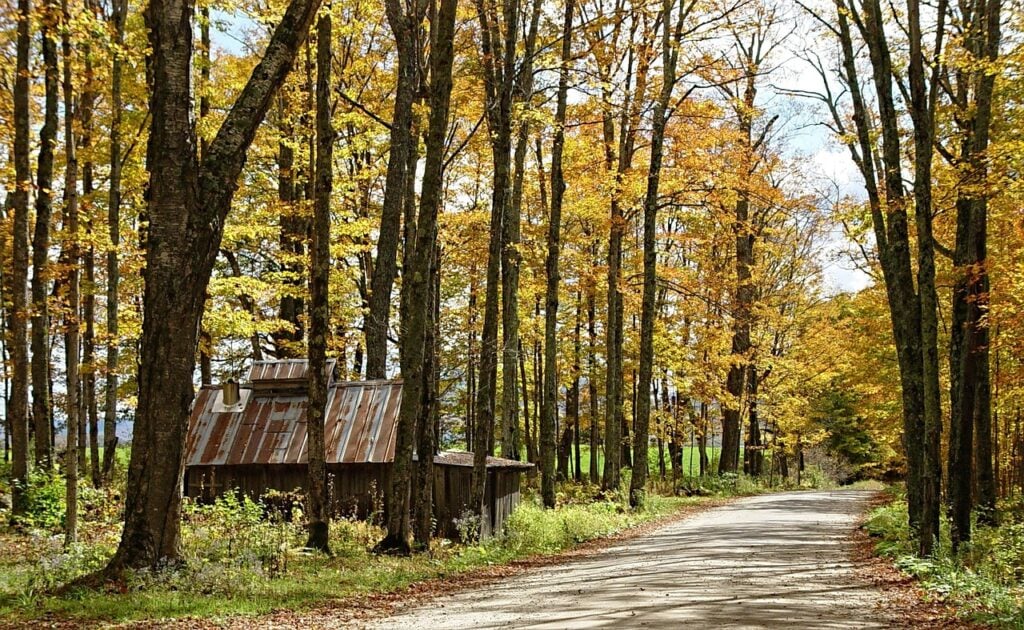
Soft Maple is reported to be doing better than other species. Green supplies are low, depending on areas contacted, as many are focused on cutting Hard Maple. SAP & Better items are also in demand, although sellers indicate some price concessions at times to keep No. 1 Common moving.
Concentration yards who export are seeking more Red Oak inventory as domestic sales are decent, and there has been an upturn in overseas business. However, truck trailer flooring producers reduced their purchases due to slow finished goods sales. Residential flooring plants are also reigning in their purchases of this species. Demand was reportedly good on domestic markets, to the U.S., Europe and Chinese markets for kiln-dried Oak.
White Oak demand is noted as mixed, due to increased freight costs noted businesses. Demand from residential flooring plants is fair, while the truck trailer flooring sector is slower. There is sufficient supply to meet market needs.
The Hon. François-Philippe Champagne, Minister of Finance and National Revenue, directed the Canadian International Trade Tribunal to conduct an inquiry on global imports of frozen and canned vegetables. In parallel, the government is also assessing an urgent, separate request from the Canadian Wood Products Alliance for a safeguard inquiry on wood cabinets and vanities, hardwood flooring, and engineered wood storage furniture. The government intends to respond to this request in a timely manner.
“We will continue to monitor import trends closely and are prepared to take additional actions, as appropriate, to ensure the continued resilience of the Canadian economy.”
The Consumer Price Index (CPI) rose 1.8 percent on a year-over-year basis in February, said Statistics Canada in March. The slowdown in the all-items CPI on a year-over-year basis was largely driven by a monthly increase in prices in February 2025, when the Goods and Services Tax and Harmonized Sales Tax break ended mid-month, where consumers paid more for affected products. This month-over-month increase fell out of the 12-month price movement in February 2026, the data agency said, in what economists refer to as a “base year effect.”
Core inflation measures also decelerated, with the CPI excluding food and energy decelerating to 2.0 percent (y/y). Gasoline prices remained much lower than a year earlier (-14.2 percent), and rent prices decelerated to 3.9 percent from 4.3 percent in January. The latter slowdown helped pull overall shelter price growth down to 1.5 percent.
February’s CPI figure may be the calm before the storm, however, as oil prices have risen sharply. The conflict in the Middle East has already pushed gasoline prices higher in Canada, and March’s CPI release will show accelerating energy costs. As the removal of the consumer carbon tax last year has held down year-over-year gasoline price changes, the unwinding of this base effect in April will see energy price comparisons soar in that month.

If higher energy prices persist, however, pressures on transportation costs will further push up food prices. And, as food and energy are among the most salient prices for consumers, their rise could drive inflation expectations higher.
At the same time, inflationary pressures are being moderated by a sluggish Canadian economy. The latest Labour Force Survey reported a loss of 84,000 jobs in February, led by a sharp decline in full-time positions. Weaker demand—compounded by slower population growth—is easing price pressure from other goods and services. This will act as a deflationary pressure in the months ahead.
On March 18, the Bank of Canada held the target for the overnight rate at 2.25 percent, with the Bank Rate at 2.50 percent and the deposit rate at 2.20 percent.
A sluggish start to 2026 and rising energy costs left limited policy room. The Canadian economy shed over 100,000 jobs over the first two months of 2026, mostly reversing gains seen in the fourth quarter of 2025, and advance estimates from Statistics Canada indicate the economy showed no growth in January. At the same time, surging oil prices are expected to push headline CPI higher over the next few months. This has narrowed the Bank’s options, as a cut risks increasing inflation even further, while a hike would restrain growth in an already soft economic environment.
The Middle East conflict poses supply risks beyond crude oil.
The Bank flagged disruptions to natural gas and fertilizer supply tied to the effective closure of the Strait of Hormuz. Oil prices have risen around 40 percent in under three weeks. If transportation bottlenecks persist, the passthrough to food and input costs could be broader than higher energy prices alone suggest.
According to Canadian Economics, they expect the Bank to hold steady for the remainder of the year, though there is considerable risk to Canadian Economics’ outlook. Despite a difficult start to the year for the Canadian economy, household spending expanded a healthy 1.7 percent in the fourth quarter of 2025, and they expect economic conditions to stabilize in 2026, reducing the need for a rate cut to stimulate the economy.

They see conflict in the Middle East and intermittent supply disruptions persisting through 2026, keeping oil prices up for much of the year. Although this might point toward an eventual rate hike, they think the most likely outcome to be Bank maintaining its policy rate for the remainder of 2026 as it continues to assess how the Canadian economy adjusts to global headwinds. However, there are significant risks to this outlook. The impact of U.S. tariffs, trade policy uncertainty and the conflict in the Middle East remain highly unpredictable and could shift the trajectory of monetary policy in the coming months.