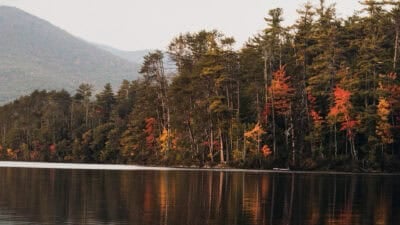
Appalachian Hardwood Forest Banking Trees
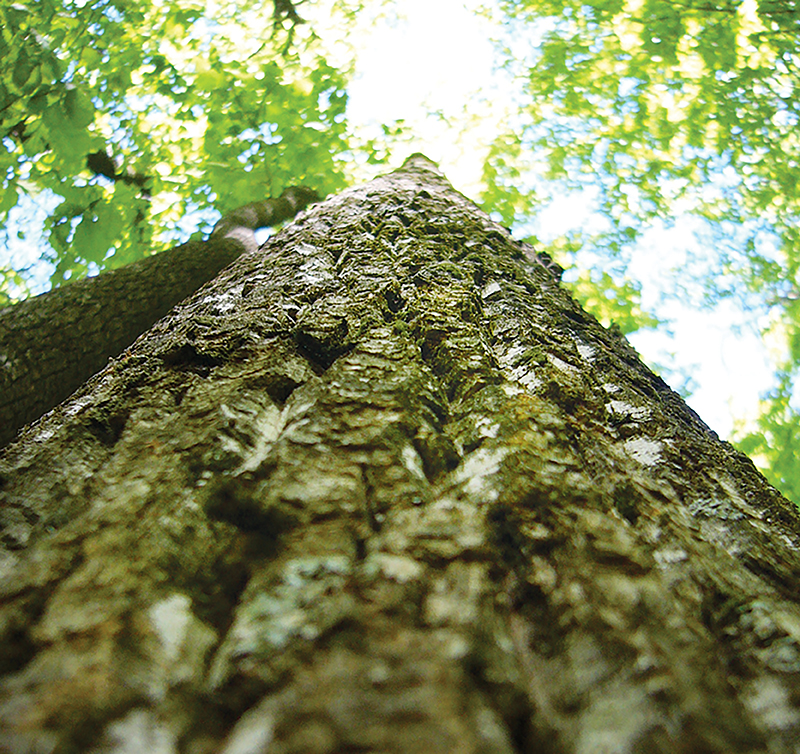
The Appalachian hardwood forest has increased its growth to removals by more than 15 percent and banking more lumber resources for the U.S. and international needs.
A 2025 update to the Certified Appalachian Legal & Sustainable programs finds 2.82 trees are growing for every tree harvested or dying combined. The ratio rise proves the Appalachian forest has exceeded sustainability for two decades.
The 2025 review was commissioned by Appalachian Hardwood Manufacturers Inc. (AHMI) as an update to studies in 2007, 2012 and 2017 by researchers in the USDA’s Forest Inventory Analysis sector. Federal law requires the agency to track forest acreage, species composition, timber size, harvest and mortality.
The latest findings from the 344 counties of the Appalachian Hardwood Forest details the ratio continues to increase – up from 2.45 in 2017 and 2.29 in 2007.
“This assures hardwood lumber consumers that purchases from the Appalachian region are sustainable,” said Tom Inman, AHMI President. “Forest landowners have done exceptional work in managing their forests for wildlife, water resources, recreation and timber for today and into the future.”
AHMI launched its “Appalachian Hardwood Verified Sustainable” campaign in 2007 to verify its members are producing, distributing and manufacturing sustainable hardwood goods from the region. The campaign educates wood consumers about the lumber resource and provides the research behind the findings.
It expanded in 2017 to “Certified Appalachian Legal & Sustainable” which provides a third-party audit that the lumber meets standards developed by the industry and non-governmental organizations.
Certification is a complex issue that has multiple stakeholders from the individual landowner through the retailer of finished goods. AHMI has researched and developed programs to assist its members in making decisions that benefit both the environment and individual operations.
The analysis derives from the U.S. Forest Service’s FIA data which is compiled in each state using text plots and then a matrix for the entire forest area. AHMI requested specific data from the 344 counties of the Appalachian Region from northern Georgia through western New York.
“Because of natural regeneration and forest management in the Appalachian region, we have an extremely stable timber base,” said Inman. “This updated analysis shows we are maintaining growth to removals of 2.82 to 1 – storing more carbon in trees and expanding the timber base for the future.”
The report also found changes in other areas:
- An estimated 34 billion live trees in the region – an increase of 1B from 2017
- Top species are Red Oak, White Oak, Poplar, Soft Maple, and Hickory.
- Three Appalachia states – Kentucky, Maryland and South Carolina – reported increases in overall forestland acreage while the others declined slightly. The overall loss to development and agriculture was less than 1 percent of the forest acreage.
“Consumers want sustainable materials and we have shown the Appalachian Hardwood Forest exceeds any definition since 2007,” Inman said. “People can be assured when they purchase hardwood products from lumber manufactured from AHMI members that the resource is growing more.”
AHMI is a regional trade association headquartered in High Point, NC. Its mission since 1928 is to promote the hardwood timber and products from the Appalachian Region of the eastern United States. The association’s bylaws dictate the producing region and these counties must meet elevation, soil composition and climate requirements to be included.
For more information, visit www.appalachianhardwood.org.