Wood For The Trees
By David Venables, AHEC Europe

Regional Director
“You can’t see the wood for the trees” is a well-used expression used when we lose sight of the bigger picture. It has also inspired the title of an immersive wood and forestry experience that we brought to London in September as part of the London Design Festival, where it was a centrepiece exhibition for Shoreditch Design Week. Designers Mitre & Mondays and fabricators Benchmark Furniture worked with us to create Wood for the Trees – an abstract forest created from character-grade American hardwood. The cleverly crafted elements represent trees of different ages and species, alongside selectively harvested logs, stumps and a canopy of veneer leaves. Together, they tell the story of the extraordinary forest stewardship and community action that has helped restore the vast hardwood forests of the Eastern United States, while making the clear connection to how we can best use the hardwood materials these forests provide.
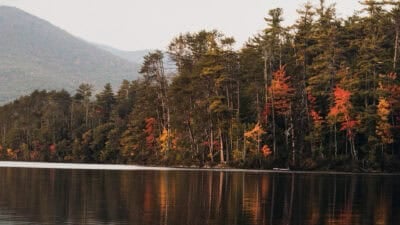
Environmental journalist Fred Pearce writes in his latest book Despite It All: A Handbook for Climate Hopefuls: “Along the Appalachians, some 20 million hectares of forests have returned. Yes, the sound of chainsaws is heard, and people are once again making a living from these forests. Even so, thanks to caring landowners, nature is growing two trees for every one harvested. Recent studies found that new forests’ power to cool the surrounding air has almost neutralized the impact of global warming across the Eastern States.”

This is a powerfully positive story, especially given the summer we have experienced.
Yet there is a real danger that these forests could once again decline because tree mortality is now outpacing harvest, restricting the growth of new forest. The problem is compounded by the way we use hardwood. We use less real hardwood, fewer species and only a small proportion of each tree in architecture and design. Consumption is driven by trends that can have a negative impact. For me, this gives the title of our exhibition a second, more provocative meaning. Wood for the Trees makes the case that we need to use wood – for the sake of the trees.

So how do we get this message across? As seen at both Three days of Design in Copenhagen and at the London Design Festival we do this by engaging and educating architects and designers that harvesting trees can make a positive material and environmental contribution. Unnecessary selection to provide what is perceived as a “better-quality” outcome simply incurs more waste, extra cost and arguably less engagement.
The AHEC team has embarked on a fascinating journey of discovery over the last few years, triggered by the production of the documentary Forested Future, where we learn so much about the power of nature to restore ecosystems and how communities that live in those forests are the key to their survival. Wood for the Trees, inspired by the documentary, brings this story to life in a new and powerful way. For me, it’s been a revelation. I have spent my whole working life talking passionately about wood, but I now find myself immersed in more conversations about forests and trees. I believe that if we all learn a little bit more about our world’s forests, we would engender a different attitude towards the use and appreciation of the amazing material trees provide. Let’s not forget: wood is nature’s gift to the material world.