Watch and See: The Crossroads Strategy Takes Shape
By Chris McQueen of Anthony Timberlands on the industry’s coordinated effort to expand federal
procurement of American hardwood products, and why members should pay attention now.
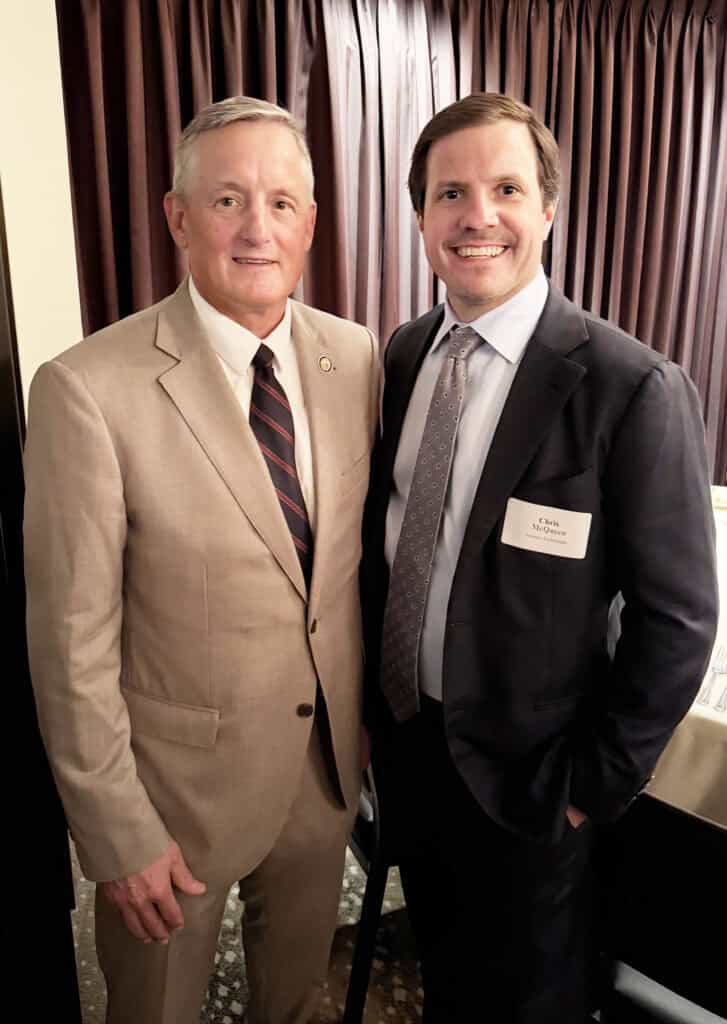
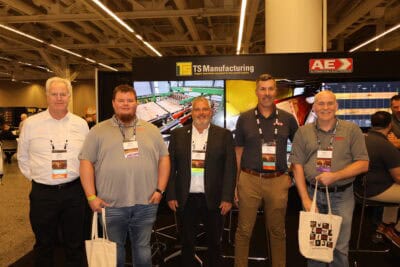
Pictured are (right) Chris McQueen of Anthony Timberlands with Arkansas Congressman Bruce Westerman, Chair of the Natural Resources Committee and the only Forester in Congress.
The hardwood industry’s challenges are no longer confined to the mill yard. Federal purchasing rules, trade policy, building standards, and overseas processing all influence whether American hardwood is grown, harvested, manufactured, and put to work here at home. Following recommendations from the National Hardwood Lumber Association’s (NHLA) Hardwood Log and Lumber Task Force, the NHLA Board unanimously approved the Crossroads Strategies Task Force. It engaged the Washington, D.C.-based government relations and public affairs firm Crossroads Strategies to help advance a long-term federal advocacy initiative.
That work is already moving. NHLA and Crossroads Strategies have developed briefing materials and policy recommendations, begun conversations with congressional offices, and planned additional outreach to federal agencies and administration officials. The effort is also examining federal procurement opportunities, Buy America, Build America compliance for hardwood products, structural hardwood research, and coordination with allied industry organizations.
For Chris McQueen of Anthony Timberlands, the initiative is both an industry strategy and a personal commitment. In this edited interview, he explains what is at stake, why early support matters, and what he believes a stronger, unified voice in Washington can accomplish.
Why did you initially believe the Crossroads initiative was something the hardwood industry needed?
CM: Our industry is at a tipping point, and if we don’t go all in now, there won’t be enough of us left to stand later. This initiative works for all of us because it focuses on keeping domestic raw material production in the United States.
What perspective do you bring to the task force that policymakers or consultants might otherwise miss?
CM: My father has worked in the sawmill industry since he was in high school, so I was exposed to it and its people long before I began working in it. When I was a kid, the Hardwood business was booming, and so were the manufacturers. Since then, there are fewer familiar faces in the room at each industry meeting. I have seen what it was and what it has turned into. I have personally had to inform long-time employees that they are being laid off due to the market for our products. I’ve seen friends lose their jobs and rural communities lose their only major employer. The sawmill I dreamed of managing so I could follow in my Dad’s footsteps was shut down a few months ago, affecting my career and that of hundreds of others. I won’t walk away from this industry due to the decline; I want to help point us in a positive direction. These issues have impacted the future of my family, my co-workers, and my employer. This is a battle that I vow to fight personally and professionally.
What has happened with the initiative recently that readers should know about?
CM: That our industry was able to band together to fund this effort in roughly a week through private contributions. When we initially discussed this plan, many thought it would never come close to reaching its monetary goal. NHLA members are fully aware of the issues our industry faces, and together we are ready to make a stand.
Where have you seen the most encouraging response to the hardwood industry’s message? What has surprised you?
CM: The amount of traction that we are getting in DC. Our Arkansas Congressman, Bruce Westerman, is the Chair of the Natural Resources Committee and the only Forester in Congress. He wants our industry to succeed and is fully aware of the jobs and economic impact our industry provides in his district. We have yet to meet an Elected Official who doesn’t want to help once we explain what is at stake.
What do people outside the industry still misunderstand about American hardwoods?
CM: They don’t realize how much they rely on hardwood for their way of life. They assume that if they don’t use hardwood, they are saving a tree or a forest, and that the rest of their lifestyle is unaffected. But that is untrue. … Using wood cabinets, flooring, and furniture also means that you get wood pallets, matting, rail ties, paper, pellets, and other critical infrastructure products that we need to transport goods or generate electricity.
Where do you see the greatest opportunity for hardwood in federal procurement, and what barriers remain?
CM: All government agencies, buildings, and funded projects should use domestically manufactured solid hardwood furnishings; that alone would rebuild our industry to the point where we can once again maximize value and support other products within our industry. It will also keep the trades and skilled workers growing in demand.
What would meaningful success from this initiative look like to you?
CM: Zero hardwood log exports and a level playing field for imported wood products. Our industry cannot compete with overseas manufacturers subsidized by foreign governments. Our country needs the rural jobs that our industry provides.
What should those in the industry be watching for over the next year? What do you think comes next?
CM: I expect the Trump administration to impose tariffs on imported wood products based on weight. Tariffs based on the declared value are easily circumvented by simply lowering it. I hope that we also find a way to prohibit the exportation of logs. We can manufacture the logs into value-added products domestically and then export the lumber. We have to keep our manufacturing jobs in the United States.
What would you tell those in the industry who wonder whether this work in Washington can actually make a difference for their business?
CM: Watch and see.