Hardwood Relief Potential In The Lame Duck
In an election year, both Houses of Congress traditionally leave Washington for the month of October so that Members can hit the campaign trail hard for the last few weeks before voters pull the lever. This year, the mid-term elections will take place on November 3. As the national media have covered extensively, the mid-terms are high stakes this year, with control of both the House and Senate up for grabs. This dynamic has negatively influenced policymaking in Washington this year as neither party has been inclined to allow the other side to get a “win” heading into November. The rare exception was the bipartisan 21st Century ROAD to Housing Act which passed both chambers nearly unanimously earlier this year and became law on July 11.

Despite this environment, the Hardwood Federation team has proceeded undeterred in advocating aggressively for our policy priorities.
At the top of the priority list is securing financial relief for our sector to help offset at least some of the damage done to U.S. hardwood producers in the wake of retaliatory tariffs on our products and competition from substitute materials, among other things. Through good old fashioned shoe leather lobbying, to grass roots media campaigns, to facility visits with key Members of Congress and help from all of you, we were able to convince leaders in the House and Senate that our “ask” was valid. A legislative provision affording $200 million to U.S. hardwood manufacturers has been drafted and now awaits a larger legislative vehicle to move it through both chambers and on to the President’s desk.
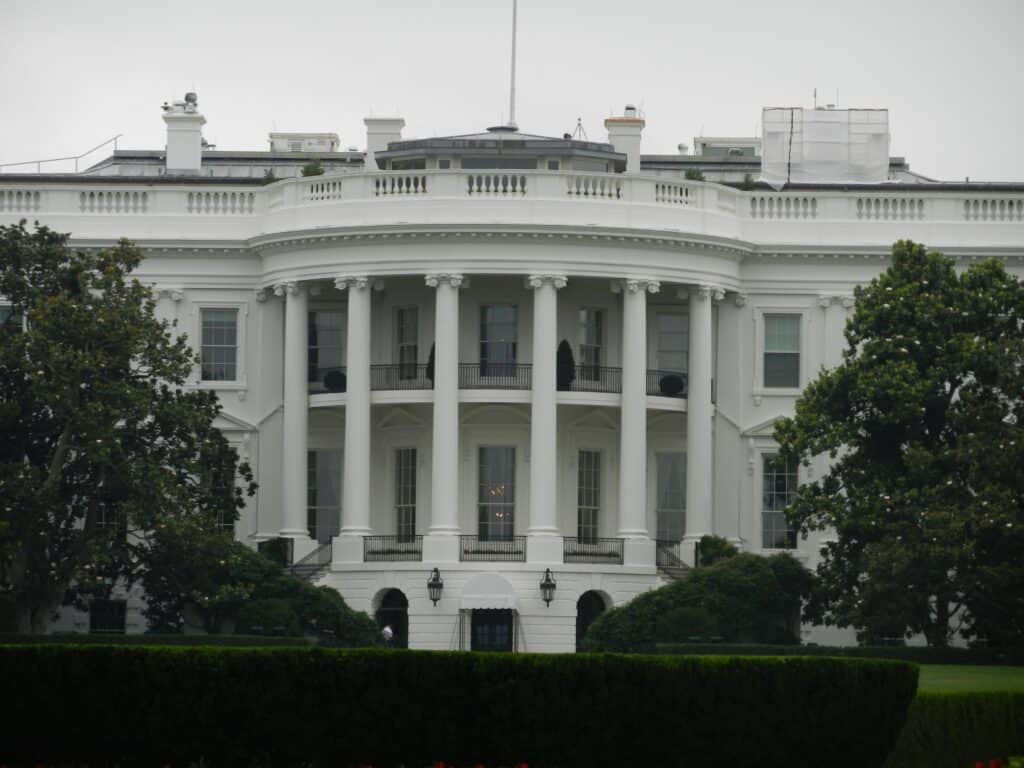
There are a number of pathways that this funding could become reality. Our most promising is the Fiscal Year 2027 appropriations process. While the House Appropriations Committee has approved all 12 annual appropriations bills, the Senate Appropriations Committee has not considered a single FY 2027 spending bill. Disagreement around overall discretionary spending amounts in the upper chamber is the reason for inaction. Because of this, a Continuing Resolution was approved by Congress to keep the government funded into December. This sets up a scenario where Congressional action on appropriations will be necessary in the Lame Duck session of Congress following the election. The Federation team has been working with appropriations leaders in both chambers to secure commitments that our $200 million provision will ride on any year-end comprehensive spending deal.
Another lane that could open up is through the budget reconciliation process. Recall, this is the parliamentary procedure that allows legislation to clear the Senate with just a simple majority vote instead of the 60 votes typically necessary to end a filibuster. The catch with this process is that all provisions in a budget reconciliation bill must have direct effect on either federal spending or tax revenues. This is not a problem for our provision, but it would likely take out federal election-related policies that the President has been seeking. Bigger ticket items on the budget reconciliation list are increased defense spending to boost munitions supplies drawn down by the conflict in Iran and agricultural relief to address that sector’s challenges brought on by the Administration’s trade policies. In July, the House Budget Committee advanced a measure which provides over $60 billion for defense needs and another $12 billion for agricultural relief. If some version of this bill were to be enacted in the Lame Duck, the hardwood relief component would be part of the larger $12 billion agriculture spend.
Another avenue would be the Farm Bill.
Although the House cleared a 5-year Farm Bill reauthorization measure earlier this year, the Senate has been bogged down over partisan disagreements around state cost sharing requirements for the Supplemental Nutrition Assistance Program (SNAP)—colloquially known as “food stamps.” If those differences are resolved, a reauthorization measure could be advanced in the Lame Duck. Both Senate Agriculture Committee chairmen support federal assistance for hardwood producers, and we are optimistic that our provision could board the Farm Bill train if it leaves the station.
The final option would be administrative action. The Hardwood Federation has been working closely with our upper-level contacts in the Department of Agriculture on finding unallocated agriculture relief dollars. This channel has not borne fruit thus far, but we maintain regular communications with political appointees and career staff at USDA to remind them of the urgency of our sector’s relief needs.
Enacting any policy item at the federal level is difficult. It takes a lot of hard work, resources and persistence and a little luck too. It also takes patience. The Hardwood Federation team thanks all of you for your commitment to this effort and sticking it out with us as we try to run through the tape on 2026 with a victory in hand. As always, we will keep you regularly posted on our progress.