Consistency in The Grain: The Cummings Lumber Story
Cummings Lumber Company Inc., of Troy, PA, produces between 8 and 10 million board feet of lumber annually, sawing primarily 4/4 Red and White Oak, Hard Maple, Soft Maple, and Cherry. Roughly 90 percent of that production is 4/4 stock, though the mill occasionally cuts heavier Red Oak or 5/4 material depending on log quality. The company’s drying capacity, with 12 kilns and 690,000 feet under SII controls, ensures lumber moves from saw to kiln without delay, a hallmark of quality that has become part of the company’s identity.
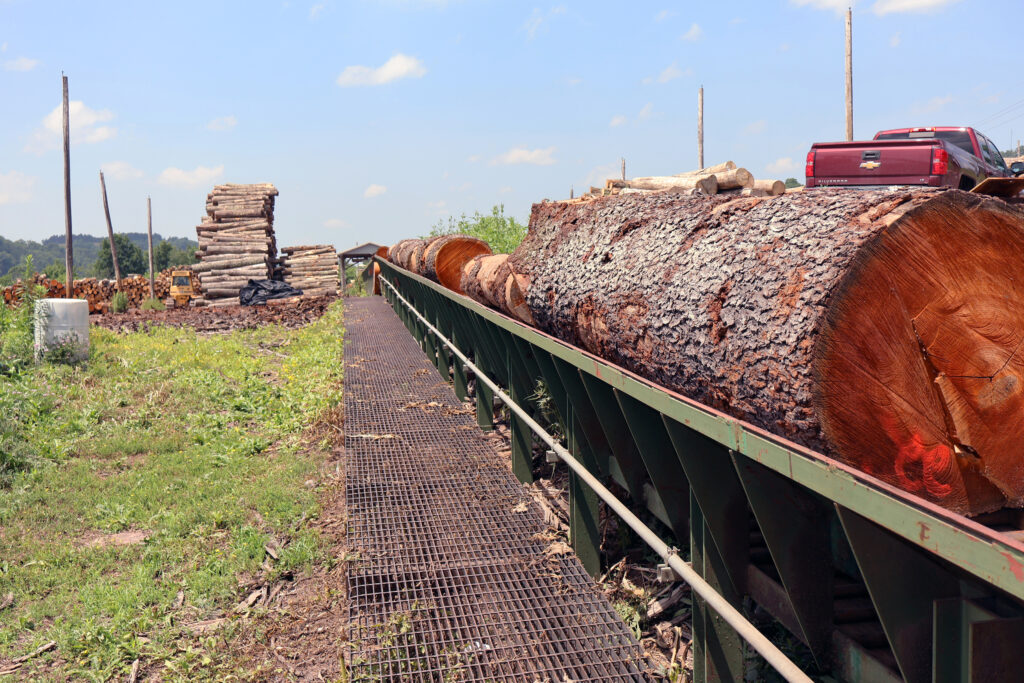
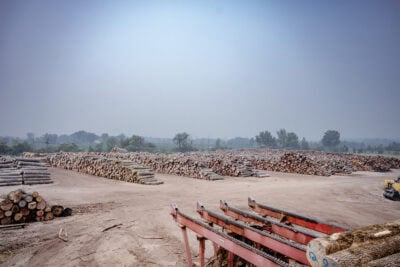
Logs continue to arrive from both private landowners and state sales through the Department of Conservation and Natural Resources and the Pennsylvania Game Commission.
That commitment to consistency was tested in June 2024 when a late-night blaze gutted the main sawmill. For a fourth-generation family business founded in 1929 by Lee William Cummings, and today led by his great-grandson, President Scott Cummings, the fire was not just a threat to operations. It was a test of values.
Cummings, also a Captain in the local fire company, was not in Troy the night of the fire. He was in Charleston, SC, attending a pellet fuel conference when the first calls came through. Fourteen fire companies responded, hauling water in tankers across winding rural roads and stretching hoses from farm ponds. They fought into the early hours, finally bringing the blaze under control. But the damage was devastating. The roof collapsed, boiler controls were destroyed, the chipper room and debarker cab were gone, and both the head saw and saw filing room were lost.
The next morning, Cummings’ first question to his wife was simple: “Is everyone okay?” The answer was yes.
No lives lost, no injuries. Relief came quickly, but reality followed close behind. Entire sections of the mill were gone, and the company faced a choice: outsource cleanup and shut down for months or take it on themselves.
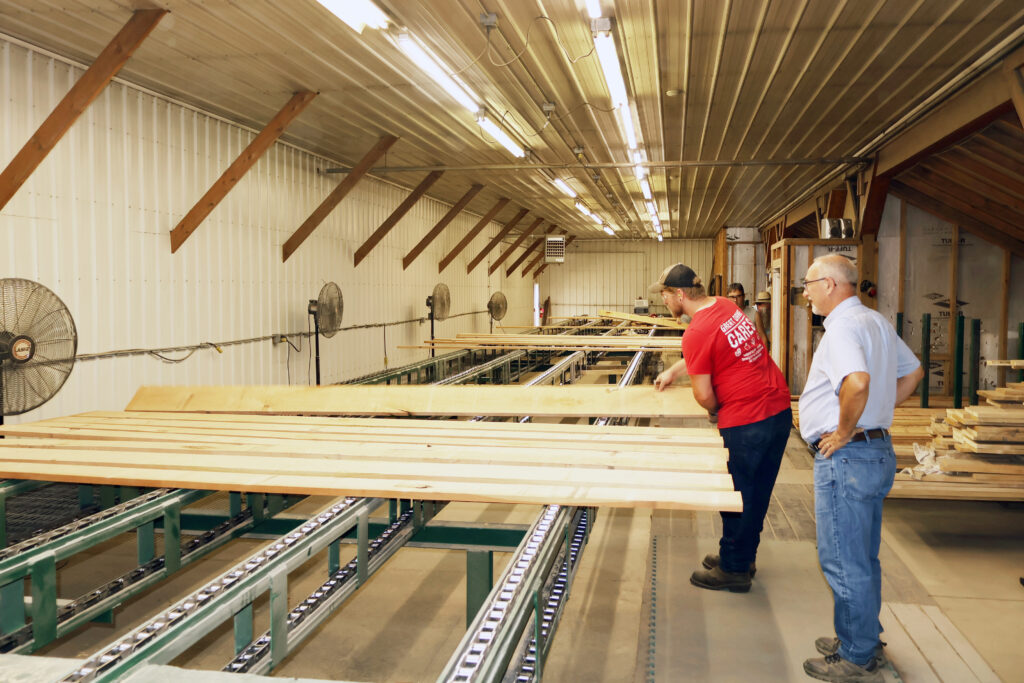
The process ends on a traditional green chain rather than a bin sorter, a choice that fits both the site and the company’s commitment to hands-on quality. Vice President Norm Steffy (right) is overseeing the final grading.
Cummings chose the latter. “We didn’t hire an outside company,” he explained. “Our employees did all the cleanup, took the equipment out, and then helped put it back in, painting and rewiring. We did it all ourselves.” That choice meant payroll continued. Apart from a short six-month layoff for a handful of employees, many of whom retired or found temporary work, the skilled workforce stayed intact. Some were moved to Barefoot Flooring and Barefoot Pellets until the sawmill could run again.
The rebuild was both practical and symbolic. Equipment lost in the fire was replaced piece by piece. A Corley carriage was replaced with a Cleereman Lumber Pro 62. A Stringer Industries chipper was replaced with a new Stringer. A Wood-Mizer was lost and later replaced as well. The Nicholson R2 ring debarker survived, though it required extensive electrical repairs. Conveyors were rebuilt. Beyond machinery, water damage forced the company to replace wiring, panel boxes, and insulation – reminders that recovery meant more than swapping out saws. By January 6, 2025, the boiler was running again and partial production resumed, less than seven months after the fire. Around 100 logs per day were squared on the Wood-Mizer and the resaw would operate in the morning until construction crews arrived to continue the rebuild. This continued until installation of the new Cleereman headrig was completed.

Cummings Lumber Company produces between 8 and 10 million board feet of lumber annually, sawing primarily 4/4 Red and White Oak, Hard Maple, Soft Maple, and Cherry. They have 1,000,000 square-feet of dry storage to house packs of their CLC 5 Star Lumber.
Logs continue to arrive from both private landowners and state sales through the Department of Conservation and Natural Resources and the Pennsylvania Game Commission. While private timber has tightened in recent years, state sales have increased, maintaining a balance of about 60 percent gatewood and 40 percent standing timber contracts. Once on site, logs pass through a line anchored by the rebuilt head saw, a 54-inch McDonough resaw, a 48-inch Stenner resaw, a Paul optimizing edger, and an HMC drop saw trimmer. The process ends on a traditional green chain rather than a bin sorter, a choice that fits both the site and the company’s commitment to hands-on quality.
Cummings’ kiln-drying operation has always been a cornerstone of its reputation. With 12 kilns, including four Nyle shells and eight American Wood Dryers shells, the company maintains 690,000 feet of drying capacity. All are controlled by SII systems, ensuring uniformity across every charge. “We don’t let lumber sit around,” said Vice President Norm Steffy. “It goes right into the kilns. That’s how we maintain quality and consistency year after year.”
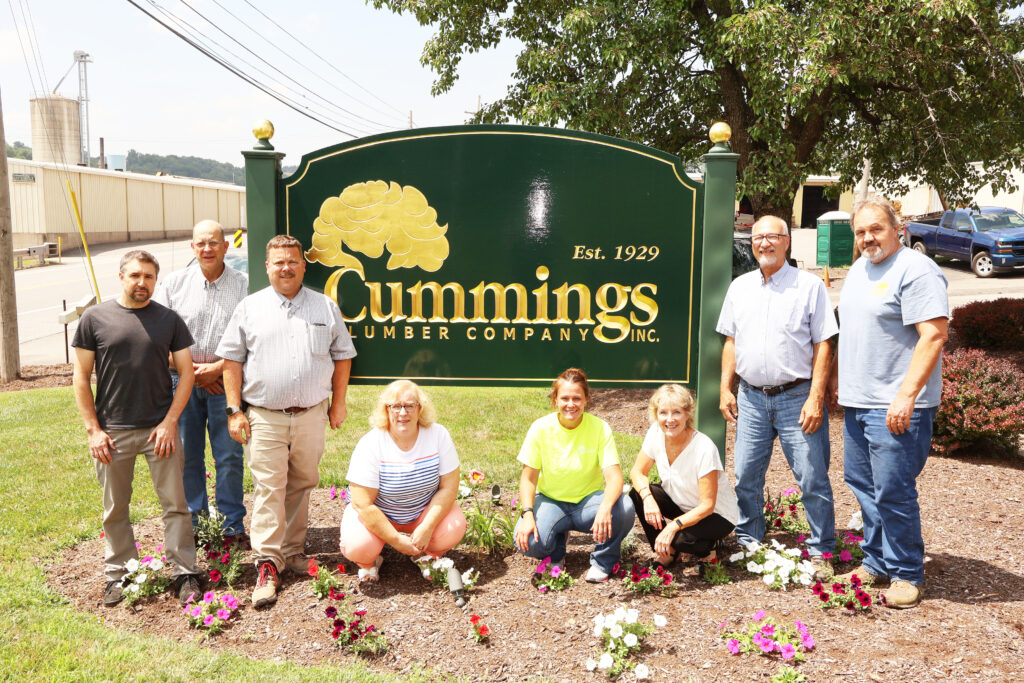
Left to right are Kevin Morgan, Gordon Calkins, Scott Cummings, Kelley Murray, Kelly Root, Cassy Dygert, Norm Steffy and John Redell.
Beyond the sawmill, the company’s subsidiaries continue to add value. Barefoot Flooring, founded in 2001 and named for the 666-pound bear Cummings harvested that same year, produces solid hardwood flooring in four widths: 2¼, 3¼, 4, and 5 inches. Red and White Oak make up about 90 percent of sales, with Cherry, Maple, and Hickory rounding out the remainder. Over 1 million board feet of outside lumber, both green and kiln-dried, is purchased to supplement Cummings’ own sawmill and kiln production. Barefoot Pellets produces around 40,000 tons annually, sourcing chips and sawdust within a 100-mile radius, and distributing regionally across the Northeast.
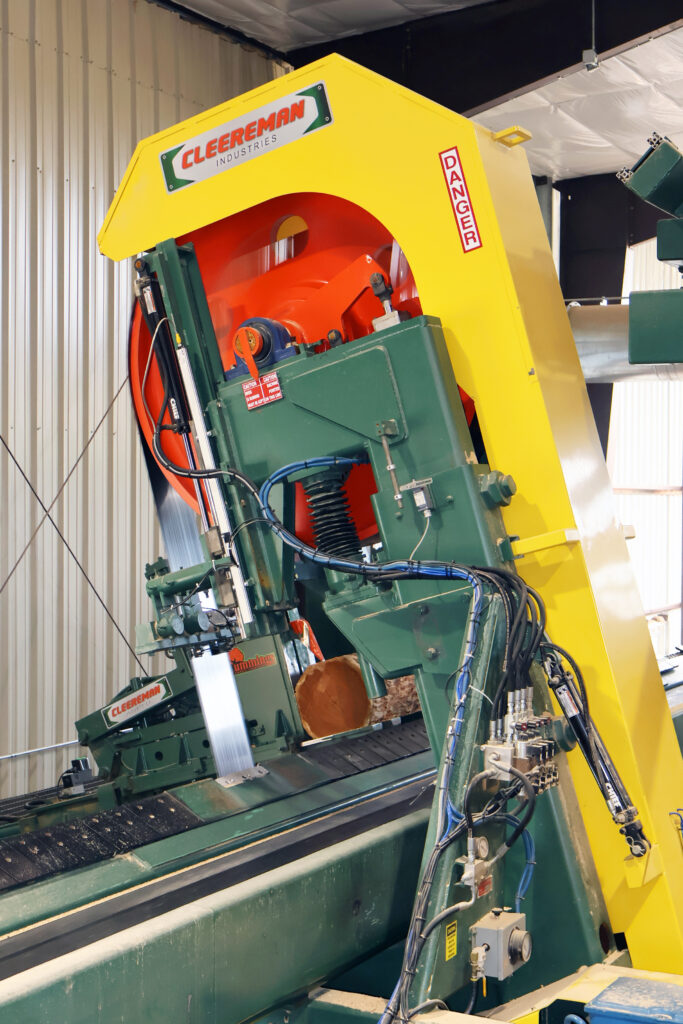
A Corley carriage was replaced with a Cleereman Lumber Pro 62 after the fire
Exports remain a steady outlet. Historically, about half of production ships overseas, with strong markets in Southeast Asia, particularly Vietnam and Malaysia. For years China was a major customer as well, until trade restrictions forced Cummings to redirect volumes elsewhere. Some lumber also moves into Canada, with occasional shipments to Europe and Mexico. Domestically, demand for Red and White Oak flooring and a consistent pellet market keep production balanced.
Through it all, quality has been the defining word. “Our strength is the consistency of quality and the quality itself,” said Steffy, who brings a unique perspective to his role as vice president. Before joining the company, he was a long-time customer. “I knew firsthand the caliber of lumber Cummings produced. That has never changed, from Scott’s father to Scott, and it’s ingrained in the DNA of the company.”
That DNA shows in the people as much as the product.
On the one-year anniversary of the fire, employees gathered to recognize what had been accomplished.
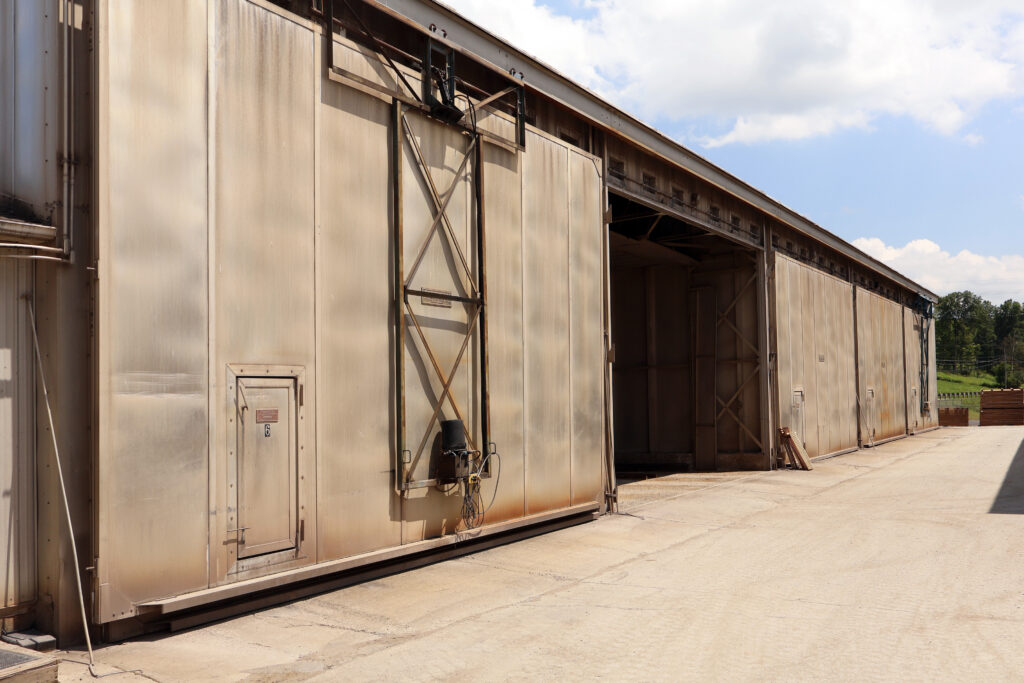
With 12 kilns, including four Nyle shells and eight American Wood Dryers shells, the company maintains 690,000 feet of drying capacity. All are controlled by SII systems, ensuring uniformity across every charge.
Expecting only a thank-you meeting, Cummings walked into a surprise event where his crew honored him with a plaque inscribed “Rising from the Ashes.” The phrase, coined by company designer Kevin Morgan and shared widely on social media during the rebuild, captured the spirit of resilience that carried the company through. Supervisor Keith Wagner said, “While many business leaders might have turned to outside contractors, Scott chose differently — he put his trust in us.”
From its founding in 1929, when Lee Cummings chose Troy for its access to rail and water power, through decades of growth, to the trials of 2024, Cummings Lumber has endured.
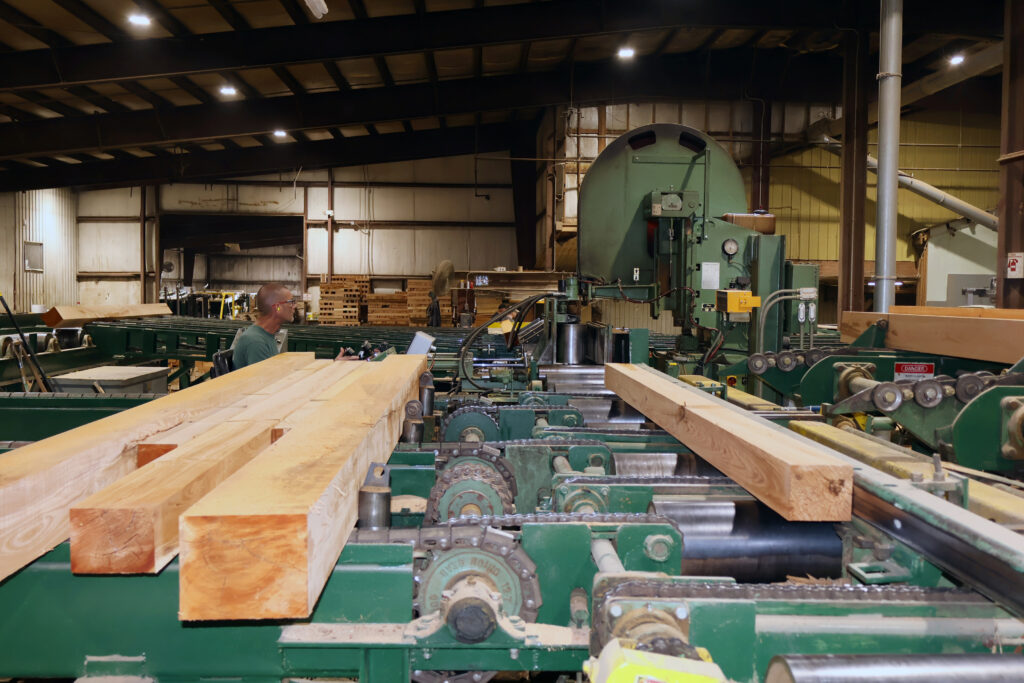
Once on site, logs pass through a line anchored by the rebuilt head saw, a 54-inch McDonough resaw, a 48-inch Stenner resaw, a Paul optimizing edger and an HMC drop saw trimmer.
Today the company employs about 120 people across lumber, flooring, and pellet operations. It belongs to a wide range of industry associations, including the National Hardwood Lumber Association, Hardwood Manufacturers Association, Appalachian Hardwood Manufacturers Inc., Pennsylvania Forest Products Association, National Wood Flooring Association, Penn-York Lumbermen’s Club, Indiana Hardwood Lumbermen’s Association, Northeastern Loggers Association, Sustainable Forestry Initiative and the Northern Tier Hardwood Association. The company also supports the Real American Hardwood Coalition and maintains membership in the Pellet Fuels Institute through its pellet operation.
The fire may have scarred the sawmill’s roofline, but it did not touch the heart of the business. Cummings Lumber rebuilt and remains what it has always been: a family business committed to quality, consistency and community. President Scott Cummings’ decades of service as a volunteer firefighter in Troy brings that spirit full circle, protecting the community on one hand and rebuilding it on the other.
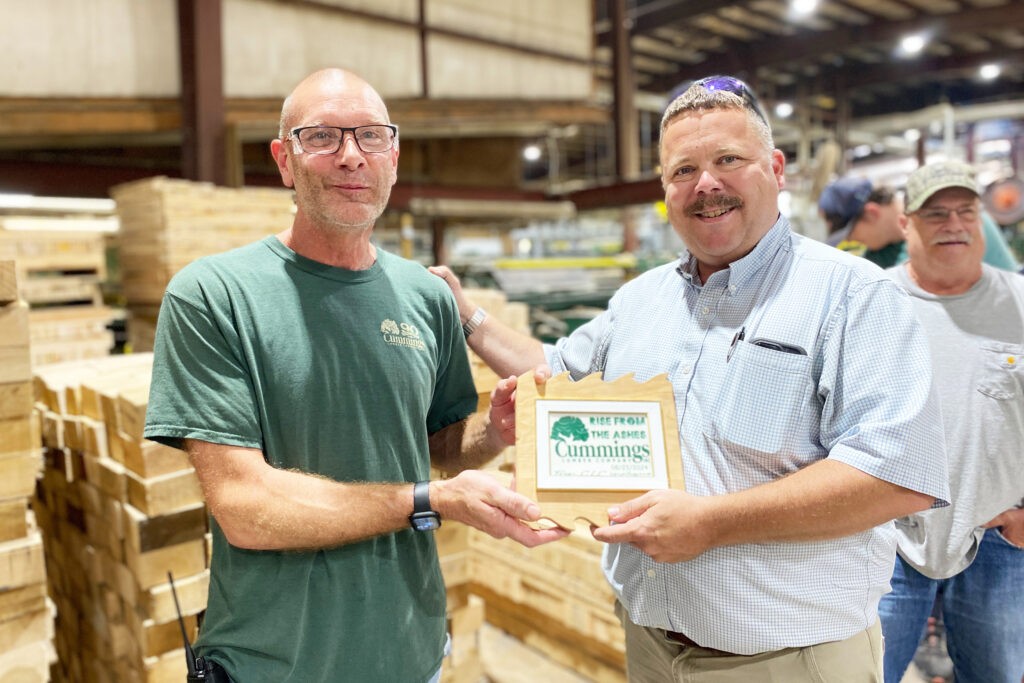
Scott Cummings (right) walked into a surprise event where his crew honored him with a plaque inscribed “Rising from the Ashes” presented by Keith Wagner (left).
Cummings Lumber still stands tall in Troy, PA, still sawing, still drying, still rising. For more information visit clc1.com.